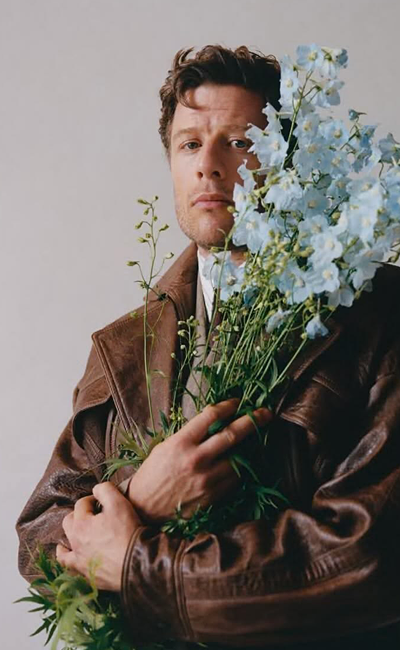
The study was close and humid, redolent with the scent of evening stock and mignonette that crept in from the conservatory. The ghost of a breeze whispered through the open skylight, sending the gas lamp above the bureau trembling. Kepheus leaned toward the flame, studying a slip of paper not wider than his palm. A tiny, slanting hand filled the page, its sepia-brown ink thin and water-like. On the reverse, entwined flowers sprawled across the scrap, outlined in a single pencil stroke suggestive of a woman’s shoulder.
“Home before two in the morning? Don’t tell me that ghastly pile of corpses started dwindling.”
“We will not call it that.” Kepheus, his voice mild, lowered the note to peer at the woman standing in the open archway of his study. His grandmother looked as nonchalant as ever, rain-gray hair framing her narrow, sharp-cut face in gentle waves. “They found a body in the farmlands. Might be a woman I have been looking for. I am riding in the morning with Dr. Phelps.”
He watched her mince across the carpet, a wide-rimmed, narrow-bottomed glass in one hand and a twist of moonweed in the other. “I thought you were playing cards with Minerva tonight.”
“That’s the problem with having friends my age,” Jocasta said as she invited herself into a high-backed leather chair, her legs arrayed casually over its side as if she were fifteen. “They are terrible at holding their liquor. I had to park Minie in a guest room downstairs.”
She took a drag, a tang of smoke lazily coiling against her cheek. “Is this about the young woman who followed you home from the morgue last month?”
“Her mother’s lawyer will not release her personal funds without a death certificate.” He shifted the note between two pages of his personal ledger. “And I can’t write one without a body.”
“This city has nameless corpses stacked floor to ceiling in every morgue and then some. And you still come up short on the ones you need.” Jocasta lifted her glass, then slipped one foot behind the other to nudge off her shoe. “That’s a little negligent of you, Pheus.”
“I will let people know the great Jocasta Ataraksi suggested they stop dropping dead in the midst of a crisis,” he said wryly.
His grandmother laughed, the sound low and husky, but there must have been something in his expression, for she broke off and instead offered him her smoke. “I am sorry. I may have had a glass too much as well,” she said as he took the proffered moonweed. “I am glad you are trying to help the poor girl. I really am.”
Kepheus exhaled, watching his grandmother study the skylight. His weariness softened into something gentler at the sight of her. “I could play a hand or two, maybe,” he said at last.
“Don’t worry. I only came up to give you something.” She straightened, careful not to spill her drink. “I was sorting through your grandfather’s photographs and thought you may want to have it.”
Leaning over, she placed the picture on the bureau before him. It was old; its colours had faded to the bilious yellow and brown of weak tea. It showed the garden at the back of the house. The dark shape of a hound stretched languidly in the grass before three ghostly figures. In the middle stood a girl in a plain summer dress, her fair hair cut in a short, hoydenish fashion. At her left, a younger version of himself sat on a wicker garden chair, and to her right loomed a dark-haired boy a little older than the two of them.
“Can’t say I have ever seen children closer than the three of you,” Jocasta said, her head bent toward the photograph, her smile wan. “I still remember Satya commandeering you and Sol around the garden. Couldn’t say I was surprised when she decided to become a doctor, the two of you followed suit.”
◇◆◇
My aunt Augusta once asked me how I could work with bodies, after everything that happened. How I could stand the smell and sight of a corpse that had been in the river for a while.
The truth is—I don’t remember much of our time in the water.
I recall fragments of the days before. The ship, mostly. The endless parade of crates and boxes Mother hoped to bring along to the city once FFather had seen his fill of the estuary. The two of them on deck, father measuring an aggressively unhappy tern while mother tried to sketch it at the same time. Solomon showing you a few sailing knots his father had taught him. Your father down in his berth, preparing mother’s daily iron and quinine draught.
The horizon; vast, distant, and immutable.
The horizon, far less immutable, beneath a lead-coloured sky; waves towering in the distance as lightning tears through the clouds.
Mother shoving you and Sol into our cabin, the ship bucking beneath us. The groaning of wood, like a large beast dying. Water, rushing in beneath the door, lapping at our feet. The cabin, tilting and rolling, until darkness swallows us.
Shreds and slivers of the days that follow. Sol keeping us above the surf whenever we grew too tired to hold on to the flotsam. The tangle of trunks we tied together so that we could sleep in shifts, two at a time, until Sol got sick and it was just the two of us, switching places in the gelid brine.
I remember the salt crusting on my skin whenever it was my turn on watch, and Sol burning and murmuring at my side. His thrashing frightened me, but it was worse when he grew still between fits. Your hand on mine as you told me of the family your father had worked for until recently.
I didn’t think much of death, then. About the cold, perhaps. About the hull pressing down on us, the sensation of slow suffocation that persisted even after the water stopped rising and it became clear we had struck a reef.
I still think about that sometimes, when I am alone, in small, enclosed rooms.
I don’t remember the men who found us, or how they packed us off to my grandparents, assuming Grandfather and Great-Uncle Linus would pay for their trouble. Well, I doubt they knew Grandfather. Great-Uncle Linus, however, was an officiously pious man; anything short of effusive generosity to the rescuers of his only great-nephew would, I imagine, have been a wrinkle in his self-image.
I never learned whether my answer satisfied Aunt Augusta, but she didn’t ask for details, either.
She, more than many others, knew that working with the dead was not my first vocation.
◇◆◇
“We have more questions about the death of Solomon Keen.”
Kepheus’s eyes stuttered open. A white face above a dark collar swam into focus, the woman’s nose a pale scimitar above the bloodless slash of her mouth, her tawny hair lank in the cell’s tepid, motionless air.
He couldn’t have said how long she had been sitting there, watching him.
“According to your previous statements and our own reports, you found Dr. Keen’s body in the evening hours of the tenth.” She had a pleasant voice; smooth, conversational. “You were with Satya Gelig, a colleague of yours and Keen’s. You went to his apartment after he missed an appointment with you.”
With effort, he struggled upright. His mouth felt dry. Dizziness softened the edges of his vision.
“After he didn’t answer the door, you forced it and found his body in the drawing room.” The woman paused, leaving room for him to comment.
He didn’t. For a heartbeat or two, he expected to see Solomon: his face ashen, as it had been on the day they found him, his left cheek and jaw bruised dark where he had struck the table. The man who had last questioned him had liked to conjure his image whenever he thought Kepheus’s memory needed a jolt. But the cell didn’t turn into a room choked with books and anatomical drawings, and the space between them remained blessedly empty.
“You said you last saw him on the third, also in company of Dr. Gelig, when he excused himself from a hunting trip you had planned.” If the woman had noticed his hesitation, she made no show of it. “What was your impression of him that day?”
“He wasn’t feeling well.” Kepheus worked his jaw, trying to ignore the strangeness of his voice. “He was running a light fever.”
“I understand that you have known him for some time. The three of you were apprenticed to two of Dr. Gelig’s uncles until recently. You were friends. You saw him regularly.” She leant back, her expression unreadable. “Would you say he was in good health? No chronic conditions that could have contributed to his fall?”
“He was well,” Kepheus said simply. “And nothing beside the obvious.”
“Ah, yes. That.” The woman paused, bowing her head as if in thought. “He was a shifter, yes? Could he have stopped the Treatment?”
“Only if he wanted to die.”
“Curious.” The woman produced a familiar, charred notebook. “We found this in his fireplace. It suggests he was skipping doses every other month, while you and Ms. Gelig took notes.”
Kepheus stilled. “Missing a vial or two isn’t usually critical. It happens occasionally when patients can’t keep down their food or run out of supply in the middle of nowhere.” His gaze dropped. “We were careful. He was never in danger while we watched.”
“I am not sure all your colleagues would agree.” Her voice was still soft, but there was an undercurrent of something else; rough and guarded. For the first time, he looked at her, wondering how old she was.
“I understand you were interested in his underlying condition,” she continued, her head cocked to the side. “Wouldn’t it have been easier, analyzing the cure? You had vials to spare.”
“It’s possible to analyze tinctures, but the magic used in creating the Treatment complicates the matter. It already masks the smell and taste of the final product. It stands to reason it might change other aspects, like the boiling points of its components. I am not saying it is impossible, but it would take decades of work or prior art.”
It would have taken time they didn’t have.
Previous studies, no one had yet dared to do.
“So, you thought experimenting with a patient was the better option,” the woman said, lifting a hand when he leant forward to protest. “I believe you when you say you were careful. But can you say the same about Dr. Gelig? It is said she is ambitious. Eager to leave her mark.”
“Dr. Gelig only cared about improving the lives of her patients.” Something hot and ugly stirred in his chest, but he forced himself to remain calm. “As did Dr. Keen. He was the one who set the pace for our experiments.”
“I am sure he did.”
The woman produced another, slimmer ledger; unfamiliar.
“We found this among Dr. Keen’s personal belongings. He used it to detail his involvement in your experiments.” She leafed through the notes until she found one marked by a piece of black cord. “I particularly like this passage:
It felt like drowning again, as if there was a weight pulling me down. I tried to breathe but couldn’t. It was like thousands of red-hot needles piercing my side, driven deeper by the minute.
“It goes on like this for a bit. There are a couple of entries, going well back to your time as apprentices. There are some other entries too, where he worries about letting you and Dr. Gelig down.”
Kepheus resisted the urge to reach across the table and snatch the booklet from her hands. Whatever anger he had felt moments ago had turned to ice.
“I never said it wasn’t hard on him, but he assured us it was bearable. We were all invested in a success.”
“Not quite equally, I would think.”
The ledger closed with an audible thud.
“Ignoring the small scandal your grandfather caused by marrying without the family’s blessing—you are still an Ataraksi. Your first cousin once removed is the family head. His sister insists you call her aunt, ever since your miraculous rescue. Ms. Gelig’s family consists by and large of renowned physicians. Mr. Keen, on the other hand, is the son of a boatswain. He would have ended up in an orphanage had it not been for your family’s goodwill, and he would never have been given an apprenticeship without Ms. Gelig’s intervention. It would seem Dr. Keen stood to lose much, beside his life, that is.”
“Are you implying we took advantage of his situation?” Inevitably, Kepheus felt his dismay return. “That we used him to our ends?”
“I am implying that he was worried he would not keep pace with you and Dr. Gelig.”
Kepheus’s lips pressed into a thin line. “That’s not how he thought of us.”
“Well, I would hope so.” She put the notes aside. “Personally, I would hate to know my ambitions killed a friend desperate to keep up with me.”
◇◆◇
I know people blame you for what happened.
Even our friends always felt that you were the driving force behind the three of us.
You had that effect on people. A talent for galvanizing a room, for inspiring confidence in those around you. I am not blind to your gifts. We wouldn’t have survived those days at sea without you. You were the one relentlessly searching the flotsam, the one who found Mother’s old travelling flask and rationed our water, the one who believed in our rescue.
For better or worse, you have been our north star ever since.
It’s the reason why people always thought you were leading us on. That you instigated the small rivalries between Sol and me to keep us in your orbit. But they didn’t know us. We could be stubborn, too, about the things we wanted.
It wasn’t your idea to get into medicine. It was Sol, who had taken a shine to the work as a personal physician, having watched your father attend Mother. It was me who dreamed about making a difference. It was you who took our idle musing and gave it form.
I always admired that about you. Your ability to fully give yourself over to an idea or ideal, to wrap yourself in its purpose.
But that doesn’t mean we didn’t want it too. We all wanted to ask the difficult questions, to see what lay beyond what we had been taught. We were young and reckless and too full of ourselves to wonder why no one had done these things before. In hindsight, it is easy to see the hubris.
I know you don’t want to hear that.
You always thought we could do it, deliver some great breakthrough, stand at the center of another miracle. But the same verve that made you so tenacious also made it difficult for you to know when to stop. Losing never came easy to you, and failure even less so.
But we did fail.
The idea of improving on the Treatment never bothered me the way it bothers some. Suggesting that improvement is possible does imply the Loom is fallible. I always felt the Loom was granting us our gifts so we could use them for the betterment of ourselves and others. It felt right to try and advance the field, but you can’t deny we never made much progress.
I think Sol realized as much. He was different in those last months. Withdrawn. Thoughtful. I thought he might have found a new angle. There was something in his eyes that made me think he hoped to surprise us. You must have noticed it as well.
I wonder how we could have been so wrong.
I have so often gone over our last weeks together, I no longer know if I am remembering things or merely rearranging them. Maybe we did miss the signs. I know you don’t want to hear that. I don’t want to think about it, either. Some days I almost delude myself into believing it was some freak accident, or that I am fine with not knowing, but it never lasts.
It’s wrong for people to blame you for what happened.
But that does not mean we were right to meddle.
◇◆◇
The melody was halfway between a paean and a dirge, slow, haunting strings twining with driving crescendos that drowned out the distant crashing of the surf. Solomon had turned away from their haphazardly stacked bonfire, his face a rugged crescent beneath dark, windswept curls.
Kepheus listened, eyes half closed, his back against the cooling sand.
On the other side of the fire, Satya groaned. “Sol, please. Must you make a funeral of our celebration?”
“You are free to play, if you want,” Solomon teased, drawing a mournful weep from his violin. “You know everything better anyway.”
“Quite so. I do.”
She rose. Half a head shorter than the two of them, with a wiry sort of strength, it was the golden banner of her hair and the billowing fabric of her skirt that gave her substance against the dark tableau of the sea. She looked at him, her eyes mischievous in the fickle light of the flames.
He made no effort to move. There was no point dissuading her now.
Abandoning the bottle of port she had been nursing, Satya turned towards the beach.
With a smirk, Kepheus closed his eyes and listened to his friends scuffling in the dark. He knew their sounds well enough to imagine them without looking, close, then distant, then close again, as they mock-wrestled over the instrument.
It was only a little while later that he heard someone walk up and Solomon stretch out on the sand beside him. For a time, neither of them spoke.
“You are awfully quiet tonight,” Solomon said finally, as the unsteady chirping of his violin rose again, closer to the water this time.
“Just thinking about next week.” He looked up at the sky, where the mother-of-pearl sheen of the boundary winked ghostly between the stars. “Sure you want to go another day?”
“I bested you in every exam we took this month.” Sol leaned closer, his breath warm against the side of his face. “You are just worried I will do it again.”
Kepheus lifted his chin and pressed his mouth against Sol’s lips. Somewhere in the distance, Satya’s ditty died away. Sol shifted until their bodies pressed together in the dancing light of the fire, one hand coming to rest against his stomach. The rich tang of Satya’s favorite port filled his mouth. The moment attenuated, growing sharp and warm in Kepheus’s mind as he trailed one hand along Sol’s side.
They only parted a few moments later, when footsteps approached the camp.
“I will say, I may lack practice,” Satya announced as she swayed back into the firelight. Gingerly, she placed the violin on the crumpled shape of her cloak, well outside the campfire’s flying sparks.
Sol leaned back, just far enough for Satya to nestle herself into the interstice of their bodies. A shock of fair hair spilled across his shoulder, smelling faintly of the sea. “But I refuse to get up for morning mass the way you two do.”
“I mean, you could practice at home,” Sol said, dropping back against the sand.
“Or you could practice with Sol, sometime.”
“I can think of more entertaining things to do with either of you,” Satya said with a grin, leaning up to kiss the hollow beneath his jaw. “Or both of you, for that matter.”
“Do any of these theoretical activities not involve a list of study materials?” Following Sol’s example, he stretched out against the sand as well, easily pulling Satya along with him.
She laughed. “I mean, some.”
Satya wriggled her shoulders until she found the perfect spot between them, then stilled. Kepheus felt her smile more than he saw it.
“Anyone else excited about next week? I feel we are close this time.”
◇◆◇
Ann Horwart died yesterday.
I am not sure you remember her. Your Uncle Rohan hired her to work the dispensary in the last year of our apprenticeship. On holidays she always brought honey cakes and homemade jam. I wouldn’t have recognised her, had it not been your uncle who came to identify her in the absence of living relatives.
It was awkward meeting him. Neither of us knew what to say.
Does he ever mention me? Or that I am working as a medical examiner for the city? I have been at the morgue for over ten years now.
I know. It’s not the sort of work I saw myself doing twenty years ago. Grandmamman wasn’t too pleased at first—she still hopes I will turn to breeding hunting dogs or some similarly noble pursuit—but she has grown to accept it. Or, at least, she doesn’t needle me about it anymore.
Aunt Augusta is a different matter. She is still piqued that I did not pick up the cloth.
I tried, for three years after they banned us from practising. It seemed worthwhile at the time. I liked having somewhere to be and something useful to do. But I was never comfortable with people asking me what they should do with their lives. It seemed presumptuous to start advising anyone else.
It didn’t feel right.
Not after what we had done.
Working at the morgue is more satisfying than it might sound. It’s not glamorous work. Even before the recent tragedies, it could be a grueling vocation. But I can help people without second-guessing my qualifications. I can give people answers. They are not always easy, or complete, but there is comfort in giving this sort of clarity.
I don’t want to pretend I will send this letter. I haven’t sent the last ones, either, and given that you never replied to those I did send, it doesn’t feel right to impose on you.
I hope you don’t mind that I used you to sort my thoughts on occasion. Perhaps that is what these letters were always for.
Wherever you are, I hope you have found something worthy of your attention and passion again. I hope you are well.
—K