Era of the Woven
Araenia
Wittheart
Magic None
Race Human
Posts 28
Chips 820
Vitals
Played By Jaecarys
Gender she/her
Age 18
Height 5'3"
Weight 120lbs
Deity Loom
Occupation menace
Companions COMING SOON
Subclass N/A
Tier N/A
Sexuality
Relationship Single
Hierarchy Aristocracy
Guild Outriders
Faction
Faceclaim Alba Baptista
Stats
STR
DEX
CON
INT
WIS
CHA
Magic Tiers
Tier One
N/A
Tier Two
N/A
Tier Three
N/A
Appearance
Araenia Wittheart has the sort of face that leads people to the wrong conclusions. There is delicacy to her features, to the shape of her mouth, the dark watchfulness of her eyes, the fine cast of bone beneath her skin, but little else about her invites softness. She carries herself like someone more accustomed to bracing than being beheld, with a restless, guarded energy that sits uneasily beside the elegance of her birth. Nothing about her feels ornamental once she moves. She wears beauty badly on purpose, favoring weathered leather, worn boots, practical riding clothes, and anything that allows for speed, balance, and freedom of motion over anything meant to flatter or display. Even when dressed finely, she seems like a creature briefly cornered into costume. Wind suits her better than perfume. Dirt suits her better than silk. She looks most like herself on horseback, half-wild with loose hair, hard eyes, and the sort of posture that suggests she is already pointed toward the horizon.
Mentality
Strengths
Courageous
Compassionate
Quick-witted
Resourceful
Observant
Hard-working
Open-minded
Devoted
Weaknesses
Prideful
Impulsive
Cutting when hurt
Self-isolating
Secretive
Rebellious on reflex
Holds grudges
Self-sabotaging
Personality
Araenia was not born guarded. What hardness she carries now was learned. In her youth she loved plainly, argued fiercely, and met the world with all the heedless certainty of a girl who had not yet been taught to fear what attachment could cost her. Some part of that nature remains. It shows in the speed with which she moves to protect, in the way she remembers small hurts and smaller kindnesses, in the quiet labor she will do for someone without ever naming it generosity. But these things are buried now beneath wit sharpened into defense. She has a dry mouth, a colder temper than a hotter one, and a habit of making light of what cuts deepest. Sarcasm is her shelter. Mockery, often turned on herself before anyone else can reach for it, is one of the few ways she knows to keep command of a moment. She dislikes being handled, corrected, prettied, or pitied, and has little patience for anyone who mistakes obedience for virtue. There is pride in her, and defiance, and an old loneliness she would sooner swallow than confess. Yet for all her thorns, Araenia is not cruel by nature. She is fierce-hearted, deeply loyal, and far more tender than she wishes the world to know.
Passive Magic
N/A
History
Family
Weston Attwood - grandfather [NPC]
Rhinda Attwood - grandmother [NPC]
Morena Wittheart - mother [NPC]
Quenton Wittheart - father [NPC]
Leah Attwood - cousin (deceased)
Cyrl Attwood - uncle [Shy]
Devlin Oteno - distant uncle [Sage]
Araenia
I can hear the sound of a heartbeat before it goes out
Won't ever leave my memory of bloodshed all around
Araenia moodboard
Araenia moodboard
Araenia moodboard
Araenia moodboard
Araenia moodboard
Araenia moodboard
"No." Defiance and validation.
Six years old
The sitting room smells like roses and polish and the sort of air that makes me feel as though I ought to hold my breath inside it.

I am sitting on the edge of a pale upholstered chair with my ankles crossed because Mama has told me three times that little ladies do not sprawl, and I am trying very hard not to kick my shoes off in protest. They pinch at my heels. The ribbons tied at the tops are worse. The bows brush my stockings every time I move, and I hate the feeling of them so much that I keep rubbing my calves together to try and shake them loose. It does not work. Nothing ever works when grown-ups tie things onto you.

Mama steps back to look at me, then immediately steps forward again.

“No, no. Sit straight.”

I straighten.

“Shoulders back.”

I pull them back.

“Hands in your lap, Araenia.”

I put them there with all the grace of somebody setting down two stones.

She smooths the front of my dress again anyway. It is blue. Too blue. Too stiff. It has tiny pearl buttons down the front and lace at the sleeves that scratches when I bend my wrists. My hair has been tugged into soft curls that are not soft at all, because every pin hidden in them pricks if I lean my head the wrong way. There is a sash about my middle. I have already tried twice to untie it. Mama has caught me twice.

She presses a thumb to the center of my brow, not hard, just enough to stop the scowl she says is trying to live there.

“You look lovely,” she says, as if that ought to fix anything. “Only please do not pull at yourself so much. The Lunamauls will be here soon.”

I do not care that they will be here soon. I care very much that I have been told so six times this afternoon, and each time it has made me feel worse.

I tug once at the cuff anyway.

Mama catches my hand.

“Araenia.”

I look at her. She is beautiful in the way mothers are supposed to be in stories, all smooth dark hair and careful clothes and eyes that miss nothing. When she looks pleased, the whole room feels brighter. When she looks tired, it feels as though I am the reason the candles are going out.

“I don't like this dress,” I tell her.

“Do not," she corrects. "And you are not meant to play in it.”

“I'm not playing in it. I'm sitting in it.”

She closes her eyes for half a breath, then opens them again with the long-suffering patience of saints and seamstresses.

“I am. And it is one afternoon.”

“It feels longer.”

Papa laughs once from where he stands near the hearth, though there is no humor in it. He has one hand tucked behind his back and the other resting on the mantel, posture neat as a portrait. He is not dressed for the visit yet, but even in his shirtsleeves he looks more proper than I do after an hour of being arranged.

“That is because you make every small thing into an ordeal,” he says.

My face goes hot all at once.

I drop my eyes to my lap and press my fingers together until the nails bite my palms. The sitting room windows are bright with late afternoon. Beyond them, the lawns slope down in green folds toward the trees, and beyond the trees there are the outbuildings and the road and the world, all of it better than this room.

Mama takes a breath through her nose. “She is six.”

“She is six and cannot sit still ten minutes without looking as though she has been sentenced.”

I lift my head. “Maybe I have.”

Papa’s mouth tightens. Mama’s hand stills at my shoulder.

There is a terrible, fragile silence. It stretches so long I can hear the little tick of the clock in the hall beyond the open door.

“You will apologize,” Mama says quietly.

I do not.

She waits.

My throat feels thick. I can feel the ugly pressure behind my eyes that means crying is trying to happen, and I hate that most of all. Crying never helps. Crying only proves to grown-ups that they have found the sore place.

“I do not want them to come,” I say instead, properly, staring very hard at the ribbon on my shoe. “I do not want to sit here. I do not want this dress. I do not want to be nice to him.”

“Him” hangs in the room like something dropped into still water.

Mama’s expression changes first. Not quite surprise. Something more tired than that. Papa only looks at me as if he has been told his teacup has started speaking.

“You will be pleasant to Alastair,” Mama says. “He is a guest. And will be your friend, and one day far more than your friend.”

I know Alastair in the way children know future weather. I know he exists. I know his hair is always neat. I know he is older than me and everyone says his name in a particular tone, like they are laying a table. I know that when grown-ups speak of him and me in the same breath, they get that look, the one that says the conversation is not for me even though it is always about me.

I don't like that look. I don't like his name. I don't like the way it sits beside mine as if they belong together on purpose.

“He's annoying,” I mutter.

Papa exhales sharply.

“Araenia. He comes from good stock.”

“I don't care if he is good stock,” I say louder, because now the words are coming and they feel hot and ugly and impossible to stop. “I don't want to marry him.”

For one heartbeat, neither of them says anything.

Then Papa straightens fully from the hearth and looks at me as though I have become a problem written in a language he did not expect to have to learn.

“What a ridiculous thing to say.”

“I don't want to.”

“At six, you scarcely know what you want.”

“I know that.”

Mama’s fingers tighten, just for an instant, on my shoulder. “Enough.”

I jerk away from the touch, not hard, but enough that the lace at my sleeve pulls crooked. I hate the way both their eyes go at once to the wrinkle, the disorder, the thing I have done wrong.

“You will not speak of these arrangements as though they are some insult to you,” Papa says. His voice is not raised, which somehow makes it sting more. “Must everything become a fight?”

I want to say yes. I want to say only the things that matter. I want to say that every time somebody says Alastair’s name near mine, it feels like a hand at the back of my neck.

Instead, I sit there in my hateful blue dress and feel my face burn and my chest go tight and all the words that were so brave a moment ago shrivel into something smaller and meaner.

Mama bends to straighten the sleeve I pulled out of line.

“Do not fidget,” she says, and now there is pleading buried under the firmness. “Please, Araenia. Only this once, do try not to make yourself difficult.”

There it is.

Not wicked. Not cruel. Only tired and anxious and loving in the wrong shape.

Difficult.

The word lands exactly where it always lands.

I look away from her and toward the doorway because if I look at either of them any longer I might truly cry, and then I will be little and foolish and red-eyed besides. The hall beyond is empty for a beat, all carpet runner and pale wall and distant light.

Then Uncle Cyril appears in it as if he has been conjured by desperation.

He is only halfway into the room when he notices the air has gone sharp. His gaze moves from Mama, to Papa, to me in the chair with my fists clenched in my lap. One dark brow lifts. I do not know if he has heard enough to understand, but it is Cyril and he always seems to know the shape of a room without anyone telling him.

Mama turns at the sound of his step.

“Cyril.”

He inclines his head in that easy way of his, all courtesy with something playful hidden inside it. “Sister.”

That is all. No rescue. No fuss.

But when Mama glances down to my sleeve again, he looks at me and, behind her back, pulls the most dreadful face I have ever seen in my life.

His cheeks puff out. His eyes cross. His mouth twists into something that looks half fish, half old boot.

I clamp my lips together so hard they hurt.

My laugh surges up anyway, huge and traitorous. It turns into a strangled little noise in the back of my throat. Mama looks up sharply.

“What was that?”

“Nothing,” I squeak, which makes it worse, because now my voice sounds suspiciously unlike nothing.

Uncle Cyril is once again a perfectly ordinary gentleman standing in the doorway, save for a brightness about his eyes that tells me he knows exactly what he has done.

Papa is not looking at him. Papa is looking at me with that same puzzled displeasure, as though even my near-laughter is somehow one impropriety too many. But the room has shifted already. The tightness in my chest loosens just a little.

Uncle Cyril reaches into the pocket of his coat and, when he crosses nearer, lets something small and square disappear into my lap beneath the fold of my skirt.

The motion is quick enough that Mama misses it entirely.

“For later,” he says lightly, and then he is moving again, drifting toward the sideboard as though he has only come in search of a drink or a forgotten glove or whatever adults pretend when they are trying not to be seen helping.

I look down.

A tiny carved box sits hidden in the blue valley of my skirt, no bigger than both my palms together. Dark wood, smooth at the edges from handling, with little brass pieces set into its surface in a pattern of curling leaves and stars. One corner has a sliding bit. Another has a tiny turned wheel no bigger than my fingernail. It is beautiful in the interesting way, not the pretty way. It looks as though it knows a secret and will not tell it to just anybody.

My whole body goes still.

A puzzle box.

For one blessed moment I forget my shoes. My stockings. My sleeves. Alastair. The visit. Everything.

I touch the little brass wheel with the tip of one finger and feel something inside me lift its head like a dog scenting rain.

Mama is speaking again, something about greeting them properly, but her voice has gone blurred at the edges, softened by the small wooden weight hidden against my stomach. I curl one hand around the box and keep my other one dutifully in my lap. The effort of not grinning is almost painful.

Uncle Cyril glances my way while Papa says something low to Mama near the hearth. He does not smile. He does not need to. There is the tiniest tilt at one corner of his mouth, gone as soon as I see it.

I look back down at the box.

A seam runs around one side. Another along the bottom. More hidden pieces than I can count at first glance. A thing to be solved. A thing to hold. A thing that is mine.

My breathing comes easier.

The room is still too warm. The dress still scratches. I can still feel the weight of my father’s words sitting ugly and heavy in my chest. The Lunamauls are still coming. Alastair is still somewhere out in the world with his neat hair and his neatly tied future waiting to be set down like a plate in front of me.

But now there is a puzzle box in my lap, secret as a heartbeat.

I press my thumb against the carved lid and think, with sudden fierce certainty, that if I can just keep from being sent upstairs, if I can just endure the greetings and the sitting and the smiling, then afterward I will take this box to the window seat in the west corridor where the light stays longest and I will learn every hidden catch it has.

Mama tells me again to sit up straighter.

This time, I do.

Not for Alastair. Not for her.

For later.
"Big No." Araenia meets more family.
Eight years old
The house does not sound like itself.

That is the first thing I notice.

Not the new nursemaid hurrying down the corridor with a basin tucked against her hip, though I do notice that. Not the linens draped over one arm, white as surrender. Not the way every door seems half-shut today, as if the whole house has decided to whisper. It is the quiet that feels wrong. The hush laid over everything. Even the floorboards seem to creak more softly, as though they have been warned.

I stand at the turn in the corridor with one hand on the carved banister and listen.

A murmur behind one of the doors ahead. The faint clink of glass. Someone laughing under their breath, quickly swallowed. Then nothing again.

It has been like this all morning. Servants stepping lightly. Voices lowered when I come near. Smiles that are too soft and pleased and full of secrets no one has explained to me properly, though everyone keeps acting as though I ought to understand. I understand enough. The baby is here. Everyone has been waiting for the baby, and now that she is finally here, the whole house has tipped toward her as if someone has shifted all the furniture in the night.

I do not like it.

I tell myself I am only passing through the corridor because I feel like walking. Because the schoolroom is too warm, and the garden paths are wet from last night’s rain, and I do not want to be trapped with my embroidery while the whole house behaves like a church.

This is a lie, but a useful one.

The door to Uncle Cyril’s rooms is not fully closed. Just a narrow gap. Enough for light to spill through in a pale gold stripe across the carpet.

I stop.

The clever thing would be to keep walking. The very cleverest thing would be to run down to the kitchens and steal sugared fruit and pretend I have not thought about this room once all morning.

Instead, I move closer.

Only two steps at first. Then three more, quieter this time. The hem of my dress whispers around my ankles. I hate that I am wearing a dress at all today. It is not even one of the scratchy terrible ones, just an ordinary day dress in green wool with little buttons at the wrists, but suddenly it feels like a costume I have been put into for somebody else’s play.

The voices inside are low enough that I cannot make out the words. I edge nearer until I can see through the narrow gap.

The room smells different even from here. Clean linen. Lamp oil. Something sharp and herb-like beneath it, bitter as crushed leaves. The curtains are half-drawn against the afternoon brightness, and everything inside looks softened by that pale filtered light.

For a heartbeat I do not see the baby at all.

I only see him.

Uncle Cyril is sitting near the hearth, though he is not looking at the fire. His whole attention is bent inward, gathered in his arms. I have never seen him sit so still. He is always movement, always halfway through a doorway or laughing at something or coming in with rain on his coat and city-smell clinging to him, like he has just returned from a world larger and more interesting than ours. Stillness does not suit him. It startles me almost more than anything else.

Then I see what he is holding.

The baby is smaller than I thought she would be.

That feels foolish as soon as it occurs to me. Of course babies are small. Everyone knows that. But all this whispering, all this hurrying and soft-voiced smiling, has made me think of something grander somehow. Something impossible. Instead she is only a bundle of blankets in his arms with a red little face tucked above the fold and a mouth that keeps making tiny, serious movements, as if she is already considering complaints.

That is all.

That is the baby everyone has turned the house inside out for.

I squint at her.

She does not look like much.

And yet the room belongs to her.

I can feel it at once, stupidly, furiously. The way the nursemaid stands near with her hands folded. The way the chair has been dragged closer to the hearth. The extra lamp. The low murmur from the adjoining room. The carefulness over everything, as if the whole house is holding its breath around this one creature that cannot even keep its own head up.

Something hot and ugly twists in my chest.

I hate it immediately.

Not her. I do not know her. Not really. Only this feeling. This sharp, mean little feeling that creeps up all at once and makes me think stupid things.

That he looks at her differently.

That everyone does.

That she has been here less than a day and already the room has made itself around her.

My fingers curl against the doorframe.

I think, very suddenly, of Mama talking with other ladies over tea, the way they say things like little girls grow into wives and wives grow into mothers as if they are discussing weather or garden roses. As if that is simply what girls are for, what we become if no one interrupts the process. I think of dolls set in my lap by well-meaning hands. Of lace collars. Of being told not to climb, not to scuff my shoes, not to sit like that, not to talk with my mouth so full, not to make faces when gentlemen are present.

And now here she is.

Small enough to fit between Uncle Cyril’s forearm and his chest. Pink and wrinkled and already so terribly important.

A baby girl.

Something in me recoils before I can help it.

Not because she has done anything. She has done nothing at all except appear. But she feels, all at once, like a sign set in the road ahead of me. A tiny, squalling omen wrapped in white linen.

I stare harder, as if I might find the sense in everyone’s delight if I look long enough.

She makes a little noise. Not a cry. More like a rusty hinge.

Uncle Cyril’s whole expression changes at once.

Not dramatically. That would almost be easier to bear. Just a softening. A shift at the mouth, the eyes. Something so immediate and unguarded it makes my throat tighten. He tips his head and looks down at her as though whatever strange sound she has made is the most interesting thing in the world.

My stomach drops.

It is childish. I know it is childish even while it happens. But for one sick little moment I think: what if he loves me less now?

The thought is so ugly I nearly step back from it like something alive on the floor.

I should leave.

Instead I stay where I am, because now that the feeling has arrived I cannot seem to move around it. I keep staring at the baby as though I might be able to see what she has taken. As though it might be visible if I look hard enough.

She is not pretty.

That helps, a little.

Her face is scrunched and solemn. One tiny fist has escaped the blanket and sits near her cheek, fingers curled like a pale spider. A dark little tuft of hair lies damp against the crown of her head. She looks cross. Or perhaps all babies look cross. It would make sense. I think if I were born into such a noisy, stupid world I would probably be furious too.

My mouth almost twitches.

Then Uncle Cyril looks up.

Not sharply. Not caught-you-looking. Just up, and then to the doorway, and then straight at me as if he knew all along I was there.

Heat rushes into my face.

For a heartbeat I think of darting away like I have been found stealing. But it is only Uncle Cyril, and running would make it worse somehow, so I stand where I am with one shoulder half-hidden behind the door and wish very much that floorboards could open on command.

His expression changes again. Not into laughter, exactly. Something gentler. An awareness. He shifts the baby slightly against his arm and tilts his head toward the room in a silent question.

It is invitation enough.

I freeze.

I can feel the right response hovering somewhere just out of reach. Come in. Be curious. Smile. Step closer and look. Perhaps everyone would think it sweet. Perhaps that is what an older cousin ought to do. But all at once I cannot bear the thought of crossing that strip of floor and entering the room properly, of standing beside him and seeing too clearly what has changed.

He says my name softly.

Only that.

It makes it worse.

I lift one shoulder in a shrug that feels far too stiff. “I can see from here.”

My voice comes out flatter than I mean it to. Not rude, not quite. Just small and shut.

His gaze stays on me for another second.

He does not press. That is one of the things that makes him Uncle Cyril. Most adults prod and insist and smooth and shape. He only watches, seeing more than I wish he would, and lets the silence sit without trying to fill it.

From somewhere deeper in the room comes the rustle of someone moving. A cup being set down. The muted brush of skirts. I do not look away from him long enough to see who it is. I do not want anyone else noticing me there with my guilty face and my hot cheeks and this horrid little knot of jealousy sitting alive under my ribs.

The baby makes another small, indignant sound.

I glance down despite myself.

Uncle Cyril lowers his eyes again, and for that brief moment I am grateful. It gives me room to breathe. He does something tiny, almost nothing at all, just brushes one finger against the blanket near her chin, and the strange solemn little face settles.

The sight of it stings so sharply I almost gasp.

Because there is tenderness in it, yes. But that is not the worst part. The worst part is how easy it looks. How natural. As though she has always belonged there in the crook of his arm. As though there was always meant to be someone else in the room with us.

I hate myself for that thought too.

I should be glad. I know that. I should be pleased for him. Pleased for the whole house, for the soft smiles and the warm lamps and the way even the servants look lighter on their feet today. But instead I stand there feeling as though I have come upon a door in my own house and found a room behind it I was never told existed.

He glances back at me once more.

There is no reproach in his face. No disappointment. If anything, that almost makes it harder.

I straighten, though no one has told me to. “I was only looking,” I say.

This is somehow more embarrassing than the first thing.

He inclines his head once, accepting it as if it is reason enough. As if I am not transparent as glass.

The shame arrives a beat later, hot and miserable.

Because he has been kind.

Because he noticed me.

Because he made room, and I stood in the doorway like a sulking cat and would not take it.

My throat hurts.

I step back before the feeling can grow any larger.

The gap of door narrows as I ease away from it. The room becomes only light again, and a slice of carpet, and the smell of herbs and linen faint in the hall. I turn before anyone else can call me back.

The corridor feels colder now.

I walk quickly at first, then quicker, the way I do when I do not want to be stopped. My slippers make soft sounds on the runner. The hush of the house follows me. Somewhere belowstairs a servant laughs, and then the laugh is swallowed too.

At the turn in the corridor, I stop and grip the banister with both hands.

I do not know why my eyes sting. I am not crying. I will not. It is only that the feeling inside me has nowhere sensible to go. It knocks about instead, ugly and sore.

A baby.

A tiny wrinkled baby with a fist like a spider and a face like an old apple.

And somehow she has changed everything.

I stare down through the banister spindles at the front hall below, at the pattern in the tiles, at a maid crossing with folded linens piled high in her arms. I think of Uncle Cyril’s face bent over that bundle of blankets. Of the way he looked up and saw me at once. Of the space he left for me without saying so.

I think, with sudden bitterness, that it would have been easier if he had not noticed at all.

Then I hate myself for that as well.

The house is still quiet. The house is still strange. Somewhere behind me, at the end of the corridor, the baby begins to cry in earnest for the first time, thin and startling and furious as a kettle.

I flinch.

Then I walk the other way.
"Maybe."Araenia faces the inevitable.
Eleven years old
The stables are my favorite place in the world for all the reasons Mama hates most.

They smell of hay and horse and damp leather and dust warmed gold in the afternoon light. Nothing in here shines unless it means to. Nothing has to be kept pretty for company. The floor is never quite clean, the wood is scarred and honest, and the whole place breathes in a way the house never does. Horses shift in their stalls with the soft rustle of straw and the slow thud of hooves, great warm creatures with no interest at all in etiquette or posture or whether my hem is straight.

I slip in through the side door and let it ease shut behind me, smiling before I mean to. The sound of the house goes muffled at once. No drawing-room voices. No shoes tapping in polished halls. No one telling me to sit properly or speak nicely or remember myself.

Just this.

I have a carrot tucked into my pocket, stolen fair and square from the kitchen, and by the time I reach the third stall from the end Bracken has already heard me. Her ears prick. Then her head comes up over the door, dark bay and black-maned and broad through the face, with that sharp bright look in her eye that says she is entirely aware of her own importance.

"There you are," I murmur.

Bracken blows out through her nose and stretches toward my pocket with instant, shameless purpose.

"Oh, so that's all I am to you?"

She bumps my shoulder anyway, searching me for the carrot. I laugh and pull it free before she can nose straight through my dress. The mare has a white blaze down her face, a little uneven at the bottom, and one white sock on her hind leg. She is not mean, exactly, but she is pushy in the way mares often are, full of opinions and quite sure hers are the correct ones. I love her for it.

I break the carrot in half and offer her one piece. Her lips are velvet-soft against my palm as she takes it. I rest my elbows on the stall door after, chin on crossed wrists, and watch her chew.

This is enough for me, most days.

Just being here. Just her warm breathing and the creak of leather somewhere down the row and the drifting hush of straw in the light. If I stay long enough, I can almost forget that everything outside this place is always trying to decide what I ought to be.

The side door creaks again.

I do not turn at first. Stablehand, maybe. One of the boys coming for tack. If somebody tells me to clear out, I will simply ignore them until they become impossible.

Then I hear the footsteps.

Tiny, quick, determined little taps on the worn floorboards and stone.

I close my eyes.

No.

"Raenie!"

I turn.

Leah stands in the aisle like she has discovered treasure.

She is three and bright as a dropped coin, curls escaping from a ribbon that was tied neatly this morning and is not neat now. Her dress is pale yellow with little flowers embroidered along the hem, which is a tragedy in a stable and already dusted with straw at the bottom. One stocking has slouched. Both shoes are dirty. Her cheeks are pink with the effort of either sneaking here or hurrying here or both, and her whole face is lit with delight at finding me.

"You followed me."

She nods hard. "Yes."

"Why?"

"So I come."

I stare at her.

Leah grins, pleased with this excellent explanation.

"You are not supposed to be in here."

She hurries closer anyway. "I find you."

"Found."

"I finded you."

Bracken lifts her head higher over the stall door and looks down at the little invader with slow, curious interest.

Leah stops beside me and gasps so hard I almost hear it catch in her chest. "Big horse."

"Very observant."

"Big, big horse," she says again, because once is not enough for anything at three.

Bracken stretches her nose toward the top of Leah's head and breathes in her hair.

Leah squeaks and jumps back one whole step, then looks up at me at once, eyes huge. "She sniff me."

"Yes."

"Why?"

"Because you smell strange."

Leah looks offended. "No."

"You do. Soap and biscuits and nursery."

"No nursery," she says firmly, though she was in the nursery no more than an hour ago. Then, with renewed seriousness, she points at Bracken and says, "She got face."

I look at the horse. Then at Leah. "I should hope so."

Leah ignores me. "Raenie. She got big face."

"All the better to sniff you with."

Bracken nudges the stall door once, impatient about not being the center of attention. Leah startles again, but does not move farther away. She stays half-hidden by my skirt, peering around me with all the courage in the world so long as I am standing between her and anything bigger than a chair.

"I see," she whispers, loudly enough for everyone in three counties to hear.

"You are not meant to be here," I remind her.

She immediately copies my position at the stall door, putting both hands on the top rail and peeking over as if she has always belonged there. "I here."

"Yes, I can see that. That is the problem."

"No problem."

"There is for me."

Leah looks up, deeply puzzled that I might not consider this a blessing. Then Bracken lowers her head again and all thoughts leave her except horse.

"Horse," she says, reverent now.

"That is also true."

Leah reaches one hand toward the mare, then stops and looks at me. "Touch?"

The question is smaller than the rest of her words have been. It catches me a little.

Bracken flicks an ear, calm and interested, her nose questing toward the child and whatever crumbs may still live in the pocket of that ruined little dress.

"Only if you listen."

Leah nods too fast. "Listen."

"Do not wave your hands."

She tucks them against herself at once.

"Do not shriek."

She nods again.

"And do not run under her legs, because if you do, I'll have to bury you out back."

Leah blinks at me. "No bury."

"Then behave."

"I 'have."

"Behave," I repeat.

Leah thinks very hard about this, then announces, "I good."

"Debatable."

I reach down and take her wrist gently, bringing her closer to the stall. Her hand is warm and sticky at the fingertips. Bracken lowers her head obligingly, and Leah goes very still as the mare's breath washes over her face.

"Flat hand," I say.

Leah stares at her own fingers as if they have betrayed her by having joints. I unfold them for her and turn her little palm upward.

"Like that."

"Like that," Leah repeats.

Bracken sniffs her palm, then her sleeve, then the ribbon trailing from her hair. Leah lets out the tiniest sound in the back of her throat, not frightened, only overwhelmed.

"Soft?" she whispers.

"Not yet. That's just her nose."

"Nose soft."

"Yes."

Leah turns her face up to me with awe written all through her. "Raenie. Nose soft."

Something in my chest shifts, just slightly. Annoying little thing.

Bracken nudges forward again, nosing at Leah's pocket this time. Leah squeals and grabs at my skirt with her free hand.

"She eat me!"

"She is trying to find your biscuit."

Leah freezes. "No biscuit."

"Liar."

Leah presses both hands over the front of her dress. "Mine."

Bracken nudges harder, insistent as ever. Leah laughs this time instead of squealing, high and delighted, and hides behind me only enough to keep herself safe while still peeking out.

"She funny," Leah says.

"She is greedy."

Bracken gives me a look of mild insult.

Leah sees that too. "She mad."

"She usually is."

I pull the last carrot piece from my pocket and crouch. "Here."

Leah comes at once. I put the carrot in her palm and close my fingers over hers, holding them flat.

"Stay still."

"I still."

"You are vibrating."

"I still," she says again, which is not true at all.

Bracken lowers her big head and takes the carrot from Leah's hand in one careful sweep of velvet lips.

Leah's whole body jolts with shock. Then she bursts into delighted laughter so suddenly and loudly that Bracken lifts her head in surprise.

Again, something in me softens before I can stop it.

"She eat! She eat! Raenie, she eat!"

"Yes, astonishingly, that is what horses tend to do with carrots."

Leah turns in a little circle, overcome by the magnitude of this event. Straw clings to her hem. One shoe nearly comes off.

"Again," she says.

"No."

"Again."

"There is no more."

"More."

"There is literally not."

Leah frowns at Bracken, thinking perhaps the mare has hidden the evidence somewhere in her teeth. Then, because she is incapable of silence for more than half a breath, she looks back at me and asks, "She sleep here?"

"Yes."

"All night?"

"Yes."

"In dark?"

"Yes."

Leah stares at Bracken with fresh admiration. "Brave horse."

That nearly makes me smile.

Bracken shifts, turning her great body in the stall. It is a slow, harmless movement, just a step and a roll of muscle under dark coat, but Leah startles when the mare's flank comes nearer. She steps backward too fast, her little shoe slipping sideways in the straw.

I catch her without thinking.

My hand closes around her upper arm before she can topple. In the same instant I pull her close against me and put myself between her and the stall.

"Careful."

The word comes out sharper than I mean it to.

Leah goes still, more surprised by my tone than by the stumble. She blinks up at me with wide dark eyes.

For one ugly heartbeat my own pulse is thudding too hard, as if the mare had nearly kicked or bitten or trampled her, which she did not. Nothing happened. She only slipped.

Still, my hand stays on Leah's arm another second.

Leah looks at it. Then at me. Then she leans, very matter-of-fact, against my skirts and says, "I fall."

"A little."

"I not cry."

"I can see that."

"I brave."

I let out a breath through my nose that is almost a laugh. "Apparently."

Leah nods, satisfied, and pats my wrist once as if to reassure me. It is such a ridiculous little gesture that I stare at her.

Then she points at Bracken again. "Horse move."

"Yes."

"Big move."

"Still true."

Leah thinks this over. "I stay here," she says, pressing herself neatly against my side.

That does something unbearable to me.

Because she says it with complete trust. No question in it. No thought that I might say no. Just the certainty that of course this is where she belongs now that the horse has proven it is, in fact, quite horse-sized.

I should be annoyed. I am a little. But the annoyance keeps dissolving under things I do not want to name yet.

Bracken hangs her head over the stall door again, bored by our dramatics and hopeful for more food. Leah peeks up at her from the safety of my hip.

"Horse likes me."

"Horse likes snacks."

Leah frowns. "Me too."

I laugh before I can stop myself.

Leah's entire face lights. "You laugh!"

"I did no such thing."

"You did."

"No."

"Did."

"Leah."

She beams harder, because clearly this is proof of victory.

Bracken reaches toward her again, and this time Leah does not hide. She only grips my skirt in one fist and puts out her other hand by herself, small and brave and not quite steady.

The mare breathes over her fingers. Leah giggles.

"Soft," she says again.

"Yes."

Leah strokes the white blaze once, very carefully. Bracken allows it with all the dignity of a queen receiving tribute.

"I like horse," Leah declares.

"That much is obvious."

"She pretty."

I look at Bracken. Dust on her shoulder. Mane half-tangled. Muzzle searching for treats with zero shame.

"She'd be insufferable if she knew."

Leah turns her big eyes up to me. "You pretty too."

I stare at her so long she starts to look uncertain.

Then I reach out and push a loose curl back from her face, more roughly than a nursemaid would. "Your ribbon is falling out."

She immediately touches the wrong side of her head. "No."

"Yes."

"No."

"It is literally hanging by a thread."

Leah considers this and then loses interest, because threads are nothing and horses are everything. She points again. "Raenie ride?"

"Sometimes."

"Me ride?"

"Not today."

"Tomorrow?"

"No."

"Tomorrow."

I sigh. "You are a plague."

Leah smiles brightly, taking this as good news.

Bracken nudges the top of Leah's head with her nose. Leah squeals and ducks against my side, laughing so hard she can barely stand. I put a hand on her shoulder automatically to steady her. My palm fits there so easily. Small shoulder. Small warm body. Three years old and fearless because she assumes I will catch whatever comes too near.

I do not know when that became true.

We stay longer than I mean to.

Long enough for the light through the stable windows to shift thinner and more gold. Long enough for Leah to tell Bracken half a dozen things the mare cannot possibly care about. Long enough for me to answer more of Leah's questions than I intend. What horses eat. Why they sleep standing up sometimes. Why Bracken's ears move. Why the stable smells "like horse and old boots." That last one is so exactly right that I nearly choke on a laugh.

By the time I decide she has been here long enough to get us both scolded properly, there is straw in Leah's hem, straw in her curls, and a dusty handprint on the front of her poor little dress.

"Come on."

"No."

"Yes."

"No."

"Leah."

She looks at Bracken, then at me, then at Bracken again as if perhaps one of us will take her side.

"We stay."

"We do not."

"We stay little."

"No. We go now."

She pouts. I begin walking anyway, because if there is one thing I have learned about small children, it is that they will either follow or perish theatrically on the spot. After two steps I hear the patter of shoes behind me.

"Raenie wait."

"I am not going fast."

"Too fast."

I slow a little despite myself.

Leah chatters all the way down the aisle. "Horse soft. Horse big. Horse eat fast. Horse nose funny. Horse look me. Horse like me."

"Yes, I gathered."

"Horse brave too."

"Probably."

"Horse girl?"

"Yes."

Leah brightens. "Girl horse."

"Mare."

"Mare."

"Good."

Leah repeats it three more times under her breath like a prayer. "Mare. Mare. Mare."

At the stable door I crouch and retie the ribbon hanging from her hair before it falls entirely free. My fingers are clumsy at it, but more practiced than they ought to be. Leah stands very still for perhaps two whole seconds, then points over my shoulder.

"Rat?"

I look.

There is no rat.

"No."

"Rat."

"No, that's a bucket."

Leah squints. "Big rat."

I bark a laugh and have to look away from her for a moment.

When I straighten, she holds both arms up to me without warning.

I blink. "What are you doing?"

"Up."

"Absolutely not."

"Up."

"You have legs."

She looks down at them, as if this is brand new information. Then back up at me. "Tired."

"Convenient."

"Up, Raenie."

I fold my arms. "No."

Leah thinks about this. Then she leans very dramatically against my knee and says, "Please."

It is impossible to explain how much I resent being susceptible to this child.

I mutter something rude under my breath, bend, and lift her onto my hip. She settles there with immediate confidence, one hand fisting in my shoulder, as though this was the natural end of the conversation all along.

"I heavy?" she asks.

"Terribly."

She accepts this with pride. "Big."

"That is one word for it."

The path back to the house is bright with late afternoon. Leah keeps talking against my shoulder, little bursts of thought drifting up one after another.

"Mare soft."

"Yes."

"Mare pretty."

"Debatable."

"Mare like carrot."

"Astounding insight."

"Mare like me."

I glance down at her. Her lashes are already lowering with the first drag of tiredness, but her mouth is set in stubborn certainty.

"Maybe."

Leah hums, satisfied. She lays her cheek against my shoulder and hooks one arm around my neck. Her hair smells like sunshine and dust and the sweet clean scent of the soap nurse uses.

We reach the back steps. I climb them carefully, because I do not trust her not to fling herself backward to make a point about something. She does not. She only goes soft and warm in my arms, still talking though the words have begun to blur together around the edges.

"Raenie."

"What."

"Tomorrow horse."

"No."

A pause.

"Tomorrow little horse."

"There is no little horse."

A longer pause.

"Tomorrow mare."

I open the kitchen door with my hip. Warm air and bread-smell meet us at once.

"We'll see," I say.

It is the sort of answer I have heard enough from adults to know it means yes more often than no.

Leah gives a sleepy little sigh of triumph and tucks herself closer.

I step back into the house with straw on my skirt and dust on my boots and a drowsy child in my arms, and realize with a faint, unwilling ache that somewhere between Bracken's velvet nose and Leah's sticky little hand in mine, something has shifted.

She is not just the baby anymore.

She is Leah.
"Absolutely not." Araenia faces imprisonment.
Twelve years old
The sitting room is too bright for the weather outside.

That is the first thing that puts me in a temper.

All that pale afternoon light caught in the glass-fronted cabinets and polished silver, all those flowers trying too hard in their bowls and vases, while beyond the long windows the sky has gone the color of old pewter. The clouds have been gathering since noon, low and swollen, and the air has that close, waiting feel to it, as if the whole day is holding its breath before the rain breaks.

Inside, no one seems to mind.

Mama is in one of her best gowns and her best manners. Papa has that neat, composed look about him that means company matters and I am not to embarrass him. Mrs. Lunamaul is all polished grace and careful pleasantries. Mr. Lunamaul sounds as though he was born discussing matters over tea and never once considered dying of boredom from it. The room hums with porcelain and soft laughter and the low murmur of adults making things seem effortless that ought to be admitted exhausting.

And Alastair, infuriatingly, fits.

He is fifteen now, all long lines and easy confidence, with his coat cut perfectly and his hair arranged to look as though no effort at all has gone into it, which of course means quite a lot has. He stands near one of the windows with one hand loose behind his back and the other wrapped around a teacup he does not seem particularly interested in, speaking to my father with the air of someone humoring the room rather than suffering in it. He looks exactly like the sort of boy mothers point at when they want their daughters to sit straighter and smile less like they’re planning arson.

I dislike him on sight all over again.

Not because he is cruel. He is not. Not because he is unkind. He is not really that, either. He is simply too good at this.

I am twelve and dressed like somebody’s hopeful idea of my future. The gown is pale blue. My hair has been half-pinned back. There is ribbon at my wrists, because apparently if a girl is to be paraded about, she ought to at least look gift-wrapped for the occasion. I have already been told twice not to slouch and once not to make that face, though no one has had the decency to explain what face I am meant to wear while being set beside the boy I am meant to marry one day.

The answer, I suspect, is not the one I currently have.

I am sitting beside the small table with the pastries on it, because if I must suffer I mean to do so with peach cobbler nearby, when Uncle Cyril catches my eye from across the room.

He is leaning near the hearth with a glass in one hand and that easy, dangerous charm of his hanging off him like a coat he barely bothers buttoning. Where Papa is made of pressed lines and Mama of carefully tied bows, Uncle Cyril always looks as though life has only just interrupted him on his way to something more interesting. Even dressed fine, he carries movement with him. City air. Trouble. Better stories.

He looks from me to the windows, then back again.

His brows lift the smallest bit.

I follow his glance and look toward the sky.

The clouds have sunk lower. The roses out beyond the terrace wall dip and lift in a wind that has gone cooler than it was half an hour ago.

Uncle Cyril turns his head and says, lightly enough to pass for nothing, “It looks rather like rain.”

I still.

Mama smiles as if he has made a joke.

Lady Lunamaul glances toward the windows. “Oh, I imagine we have a little time yet.”

“Long enough for a turn in the garden,” Papa says, and there it is.

There it is, bright and dreadful and exactly what I feared the moment I saw the sky and the company and Alastair standing in the same room at once.

Mama turns toward me with that calm maternal brightness that always means I am being maneuvered somewhere against my will.

“Araenia,” she says, “why don’t you show Alastair the south walk? The roses are lovely just now.”

I do not answer.

The silence lasts exactly long enough to become noticeable.

Papa clears his throat.

Uncle Cyril tries once more. “I only mention the weather because I dislike losing expensive young people to avoidable pneumonia.”

That earns a polite laugh from Mrs. Lunamaul and a look from Papa that says enough. Uncle Cyril, thwarted, glances my way and gives me the tiniest wink and shrug over the rim of his glass.

It says, quite plainly, I tried.

My temper eases by perhaps half a breath.

Then I have to stand.

Alastair sets his cup aside and steps forward at once, easy as you please, not with the stiff duty of a boy being forced into things but with the careless grace of one who has decided that if he must endure a ritual, he may as well wear it lightly. Annoying.

He opens the terrace door before I reach it.

I step past him without thanking him.

The garden air closes over me at once, cooler and wetter than inside, full of roses and clipped hedges and the damp mineral smell of a storm not yet fallen. Gravel crunches under my slippers as I walk down from the terrace. The roses are in full riot, white and blush and deep blood-red, heavy-headed in the thick air.

For a little while we say nothing.

I know his silence. He knows mine. We have known each other too long for this to feel like first acquaintance. Too many dinners. Too many holidays. Too many moments of being sat side by side by smiling adults who talk as though futures are furniture, already chosen and merely waiting to be delivered.

When we were younger, he used to look as displeased by it as I was. More openly, sometimes. I remember him once, at ten or eleven, rolling his eyes so hard during a family dinner that I thought he might lose them permanently into his skull. Now he is older, better practiced, easier in his own skin or at least better at pretending to be.

That, more than anything, is what bothers me.

We reach the turn in the path where the roses climb an arch overhead and the hedges cut the sound of the house down to almost nothing. The sky hangs low beyond the yews.

Alastair glances sidelong at me, and there is that crooked little almost-smile at one corner of his mouth.

“You do realize,” he says, “that everyone in that room could see you would rather be anywhere else.”

I keep my eyes on the path ahead. “I wasn’t aware livestock were expected to look pleased while being walked out for inspection.”

A beat.

Then, instead of sounding scandalized or wounded or even particularly offended, he lets out a soft huff that might almost be amusement.

“That is an impressively ugly way of putting it.”

“It is an ugly thing.”

“I didn’t say it wasn’t.”

That makes me look at him.

He says it so easily. No flinch, no pearl-clutching, no attempt to pretend the whole arrangement is prettier than it is. He just takes the truth of it and brushes a bit of dust off its sleeve.

I hate that almost more than denial.

He is watching me now, one brow lifted, blue eyes bright in that maddeningly calm face of his. There is something loose about him even in all that careful tailoring. Something faintly amused by the whole ugly pageant.

“You might at least try not to look as though the entire affair personally insults you,” he says.

“It does.”

“Yes,” he says, and turns his gaze back toward the roses. “I had noticed.”

The wind shifts. A cooler gust stirs the branches overhead and carries the smell of rain across the garden. Somewhere far off, thunder mutters under its breath.

I clasp my hands behind my back so I do not start ripping roses apart for something to do.

“If you mean to tell me to be agreeable about it,” I say, “save your breath.”

He laughs then, properly, though quietly. Not mocking, not cruel. Just entertained.

“I wouldn’t dream of it.”

“You seem awfully comfortable for somebody who used to hate this as much as I do.”

That catches him just enough to be satisfying.

He glances at me again. “Did I?”

“You did.”

“How tiresome of me.”

I stop walking.

He keeps going two steps more before he notices and turns back to face me. He does it with infuriating ease, one hand slipping into his pocket, shoulders loose, as if we are not discussing the shape of a prison but only the weather over tea.

“Well?” I ask.

He looks at me for a moment, then out toward the lawns, then back again.

“I only mean we’re not married yet,” he says. “There’s still a little life left to mismanage before anyone expects us to become respectable.”

I stare at him.

There it is.

The line lands like something silk-wrapped and poisonous in the grass between us.

“That,” I say slowly, “is the most revolting thing you’ve ever said to me.”

One corner of his mouth twitches. “Really? I thought it was rather optimistic.”

“Optimistic?”

He shrugs, light as breath. “As philosophies go.”

“It sounds like surrender.”

“No,” he says. “It sounds like arithmetic.”

I want to hit him with a gardening tool.

He sees it. I know he sees it because his expression sharpens just slightly, not with fear, just with interest.

“Araenia,” he says, more quietly now, “I’m not telling you to like it.”

“You could have fooled me.”

“I’m telling you that they’ll take whatever they mean to take in the end, and it seems a dreadful waste to begin giving things up before they have to be surrendered.”

I hate the words because they are almost sensible. I hate him for saying them like they ought to soothe me. I hate the calm little shrug of his shoulders and the easy way he stands there in his fine coat speaking of my future as if it is some estate account already balanced and closed.

“You say that as though it’s only a matter of time before we belong to them.”

His gaze holds mine.

“Don’t we?”

The answer is so light, so careless at first hearing, that it takes half a second for the real weight of it to strike.

That half second is enough to make it worse.

“No,” I snap. “Not if we refuse to.”

“Refuse all you like,” he says. “I did, for years. It’s wonderfully dramatic and changes very little.”

“So that’s it, then? You’ve simply decided to wear your chains well?”

That one lands.

Not because he looks wounded. He does not. But some flicker runs under the surface, quick and bright and gone. He tips his head, considering me, and the ease in him does not vanish, but it goes a shade thinner.

“If I’m to be dragged to the altar eventually,” he says, “I see no particular virtue in arriving exhausted.”

“You are impossible.”

“I know.”

“You say it like you’re proud of it.”

“Sometimes I am.”

Of course he is.

Of course.

He starts walking again, more slowly this time, and because I refuse to be left standing in the path like a sulking shrub, I follow.

The gravel crackles underfoot. The roses arch heavy over the path. From the terrace, we must look almost charming. That thought makes bile rise hot in the back of my throat.

“I suppose,” he says after a while, “there are worse fates than being legally tied to someone with a decent right hook and no gift at all for concealment.”

I cut him a look. “Was that meant to flatter me?”

“I haven’t decided yet.”

“You are not funny.”

“Oh, I think I am, just not in ways you enjoy.”

That is true enough to be aggravating.

I look away from him and out toward the south lawn, where the grass has gone darker under the shadow of the clouds.

“I don’t understand how you can talk about it like this,” I say. “Like it’s already happened.”

He is quiet for a few beats.

When he speaks again, the charm is still there, but softer, thinner round the edges.

“Because,” he says, “if I don’t, I’ll have to go about breaking things. And that does become tedious after a while.”

That I believe.

I glance at him then, properly, and for a moment I see it. Not compliance, exactly. Not peace. Something more dangerous because it wears a pleasant face. A sort of cultivated theft, where he means to take what pleasures he can before the walls come in. Parties. Attention. Flirtation. Whatever bits of life are still his to ruin.

He catches me looking and smiles as if he knows precisely what I’ve noticed and means to make it impossible to hold.

“There,” he says. “That expression is almost companionable.”

“I’m deciding whether to drown you in the ornamental pond.”

“Do give me warning first. I should hate to ruin the jacket.”

That nearly gets a laugh out of me. Nearly.

I bite the inside of my cheek instead.

The first drop of rain lands on my wrist, cold and sudden.

Another strikes the gravel near my slipper. Then another taps softly against a rose leaf beside us.

Alastair glances up through the bower overhead. “Your uncle wins.”

“Of course he does.”

The rain comes quicker after that, not a downpour yet, just a steady pattering advance, darkening the gravel and deepening the scent of the flowers until the whole garden smells bruised and lush and almost too alive. Drops catch in Alastair’s hair and at the shoulders of his coat. My sleeves begin to freckle with damp.

He looks toward the terrace, then offers me his arm with a kind of easy formality that would probably work on half the girls in the city.

It only annoys me.

Still, the rain is gathering fast, and the path has gone slick in spots.

I take it.

His sleeve is already cool with the weather. He turns us back toward the house without comment, walking at a pace just short of a run, quick enough to keep us from being soaked through and slow enough not to seem ridiculous. The whole thing has an absurd air of propriety about it, as if we are characters in some sentimental print rather than two children being steered toward a life neither of us wants.

By the time we reach the terrace steps, the rain has thickened. It taps against stone, roses, glass, the leaves of the climbing vines. Thunder rolls somewhere more serious now, no longer pretending distance.

At the top of the steps, just before the doors, Alastair glances down at me.

“For what it’s worth,” he says, “I do understand why you hate it.”

I pull my arm free from his.

“That’s not what I hate.”

No smile now. No quip. Just the rain at our backs and the bright room waiting beyond the glass.

“What, then?”

I look at him, at the easy charm and the dry wit and the polished carelessness he has wrapped around the whole ugly affair like silk over a bruise.

“I hate,” I say, “that you can speak of a life sentence in prison as if it’s only another sort of weather that will pass.”

That stills him.

Not dramatically. Just enough.

The terrace doors open from within before he can answer, a servant all apologies and concern over the rain. Warmth spills out around us. Lamplight. Rose-patterned carpet. The bright civilized mouth of the house opening to swallow us again.

I step inside first.

Rainwater clings cold at my cuffs. My hair is coming loose at the temples. Somewhere behind me, I hear Alastair follow at an unhurried pace, as though he has not just spent half a garden walk speaking of our future like something already measured and waiting.

I do not look back.

Inside, the adults are all pleased exclamations and poor things, caught in the rain, how unfortunate, come nearer the fire.

Across the room, Uncle Cyril lifts his glass in my direction without the slightest trace of triumph, though his eyes say plainly enough I told them so.

That helps, a little.

Not much.

Because now the rain is coming down hard against the windows, and somewhere under the pleasant chatter and the clink of cups, I can still hear Alastair’s voice, light as if discussing nothing more terrible than a change of season.

There’s still a little life left to mismanage.

I hate him a little for saying it.

I hate him more for meaning it.

And I hate, most of all, that some small horrible part of me understands exactly what he meant.
"I had her." Araenia learns about loss.
Thirteen years old.
[TW: drowning, child death]

The docks smell like fish scales and wet rope and tar warmed through by the afternoon sun.

It gets in everything. In my hair. In the hem of my dress. In the back of my throat when I laugh. The whole stretch of Outer Embrathis near the water has that same taste to it, saltless river damp and old wood and work done with both hands until the boards themselves seem to sweat effort. Men shout to one another over crates and coiled lines. Gulls wheel overhead and scream like offended old women. Somewhere to our left, something heavy drops with a hollow boom that makes Leah jump and then laugh because she’s decided being startled only counts if somebody sees it.

I like the docks.

They’re ugly in the right ways.

Not like parlors, where everything is polished and meant to stay in place and people are always pretending not to watch one another. The docks don’t pretend. They creak and stink and splinter and carry on exactly as they mean to. You know where you are with them.

Leah, of course, loves them instantly.

She is five and in a dress too good for this part of the city, pale blue with little pearl-bright buttons down the front and a white collar gone soft from being washed too often. Her shoes are already dusty. One ribbon at the end of her braid is hanging lower than the other because she cannot go ten steps without turning her head after something interesting enough to loosen it. She has been asking questions since we got out of the carriage and she has not the slightest intention of stopping now.

“What’s that for?”

She points at a line of nets hanging to dry, their knots gleaming damply in the light.

“Fishing.”

“What’s that for?”

A pulley bolted high against a weathered beam.

“Lifting.”

“What’s that for?”

A squat barrel, ringed in rust, with a lid half-cocked open.

“Probably something that smells worse than you.”

Leah grins up at me, delighted as always when I answer a question with any trace of insult in it. “I smell good.”

“You smell like jam.”

She lifts her wrist and sniffs it with great seriousness. “A little bit.”

“Exactly.”

She slips her hand into mine the next time a pair of laborers come by carrying a crate between them. I take hers automatically, guiding her closer to my side without looking at her. The boards beneath us are damp in places where the river air never quite dries them. They’re broad enough to walk, but not broad enough for a child who likes to skip while she talks. I keep her on the inside, away from the drop to the water, though the river still flashes through every gap between pilings, brown-green and bright where the sun catches it. It's swollen with snowmelt this early in the spring.

Cyril is not far.

I can see him ahead and a little to the right, standing with two men near the open doors of a warehouse, ledger tucked under one arm, coat dark and neat despite the grime and noise around him. He looks exactly like himself and entirely out of place, too elegant for the docks and somehow still the only man on them who makes it seem natural. One of the workmen is pointing at something on the page. Cyril tilts his head, listening, then says something that makes the older one laugh despite himself.

He glanced back at us twice already.

The second time, I lifted my hand and waved as if I was a child half Leah’s age.

He gave me a look for it and went back to business.

Leah, walking at my side, swings our joined hands once. “Do you think Uncle Cyril likes the fish smell?”

“No.”

“Do you?”

“Sorta.”

She considers this. “That’s weird.”

“I know.”

A gull drops low, lands on a piling so close Leah lets out a delighted little gasp. It has one foot tucked up and the sort of expression only gulls can manage, mean and stupid at once.

“That one looks rude,” she says.

“All gulls look rude.”

“No.” She squints at it. “That one looks extra rude.”

I bark a laugh and the gull flaps away in outrage, which only proves her right.

We’re almost to the safer edge of the dock where I meant to keep us, near the broad posts and the tied skiffs and the place where the boards widen a little for unloading, when Leah goes dead still.

I nearly keep walking without her.

Then she makes a noise like she’s just found buried treasure.

“Raenie.”

It’s a whisper in intent only. It comes out bright and much too loud.

I sigh. “What?”

She crouches without warning, dragging my hand down with her if I don’t let go quickly enough. I do, more from surprise than grace, and look where she’s pointing.

At first I see nothing but the rough side of a crate stack, the wood weathered dark at the bottom where damp has climbed it. Then I spot them.

Tiny prints.

Not muddy, not exactly. A faint tacky sheen, half-dried and nearly transparent except where the light catches it. A trail of little paw marks leading up one side of the crate at an impossible angle.

I grin before I can stop myself.

“Well.”

Leah’s eyes snap to mine. “What is it?”

“Grapplepaw.”

She gasps so sharply that I clap a hand over her mouth before she can say anything else. Her eyes go even wider with delight above my fingers.

“Quiet,” I hiss, laughing under my breath.

She nods frantically. I take my hand away.

There is the briefest pause.

Then, in a whisper every bit as loud as before, “Really?”

“Yes, really.”

She turns back to the crate as though the thing might rise and bow to the honor of being recognized. Right on cue, a slender little body flashes from behind the stack, all sleek spine and quick paws and mask-dark face. It’s got something silver hanging from its mouth, some stolen fish scrap or bit of foil or knife of reflected light, and it scales halfway up a post before I can even think to point it out.

Leah almost climbs me in her excitement.

“Raenie, look.”

“I am looking,” I smirk, amused.

“It’s little.”

“It’s a ferret.”

“It’s gonna be the best new pet.”

I turn and stare at her.

She stares back with the open, impossible conviction of a five-year-old who has decided the world has just presented her with a gift.

“We are not taking a dock ferret home.”

“We won’t take it,” she says quickly. “We keep it.”

“That is still taking.”

Her brow furrows. “Nuh-uh.”

“Yes-huh.”

“No,” she insists, because she has understood the larger point and plans to ignore it. “We can share!”

“With who?”

“With me and you.” She points where the ferret was, who has now vanished somewhere behind a stack of rope and netting. “The best new pet. We can share it.”

I laugh, helplessly and under my breath, because the absurdity of it is too perfectly Leah. “That thing would rob us blind and leave footprints everywhere. My mom would have a cow.”

She wrinkles her nose. "You don't have cows."

"She'd freak out," I clarify.

She realizes what I mean and giggles.

The grapplepaw reappears farther down, this time clinging to the side of a beam as if gravity is only a suggestion for lesser creatures. Its little resin-gloss paws leave faint prints as it darts into a narrower, more cluttered stretch of dock beyond the open work area.

Leah takes a step after it before I even realize she’s moving.

I catch the back of her dress.

“No.”

She turns, scandalized. “But Raenie.”

“No.”

“But he picked us!”

“It did no such thing.”

“It did.”

I glance toward Cyril.

Still occupied. Still turned away. Still nodding at something in the ledger with all the patience in the world for business and, very likely, none for what he’d say if he turned and saw where Leah and I were heading.

The ferret chitters once from out of sight.

Leah lights up like a lantern.

The restricted part of the dock isn’t far. Only past the stacked crates, past the loops of tarred rope, past the mooring posts. We’d be there and back in a minute. Two. Long enough to look. Long enough to prove to Leah that I can turn a dull afternoon into a secret.

“Quickly,” I mutter.

Leah’s whole face blooms with triumph. “A secret?”

“Very secret,” I whisper back.

She mimics me at once, leaning in far too close and saying, much too loud, “Right. Secret.”

I snort. “You’re terrible at it.”

“I’m quiet!”

“You are the loudest creature I know.”

She grins and reaches for my hand before I even offer it. I take hers and pull her after me around the crate stack, past a line of hooks hanging from a beam and a row of baskets turned upside down to dry. The wood is rougher here. Damp in patches. It smells stronger, more river than dock, and the noise from the main stretch goes just a little distant behind the clutter of cargo and work gear.

Leah keeps pace in those quick, hhopping little steps of hers, trying to whisper and failing every other breath.

“Do you think he lives here?”

“Probably not.”

“Where then?”

“In a wall. Or a roof.”

“With babies?”

I shrug. “Maybe.”

“Can we have the babies too?”

“Absolutely not.”

She accepts this for nearly two full steps. Then, “One baby?”

I shake my head, smiling despite myself. “No babies.”

The ribbon at the end of her braid catches on a splintered board edge as she turns to point at something. I tug her gently back, free it, then straighten the bow before it can come loose altogether.

“Hold still.”

“I am still!”

“You are wriggling.”

“I’m only little." She's parroting her father when he comes to her defense.

“Interesting," I reply. "Because yesterday you told me you were grown.”

“I’m both.”

I have absolutely no answer to that but a snort and a shake of my head.

The grapplepaw’s little prints streak up the side of a post and vanish below a loading platform where the dock juts out farther over the river. It’s more shadowed here, cooler under the boards. The tide knocks lazily at the pilings below. I can hear water slapping wood in a slower, more private rhythm than the open river beyond.

Leah squeezes my hand hard. “There.”

“I see it.”

“Can we go?”

I should say no.

But it is cute. And Leah loves adventures.

We duck around the edge of the platform, where the structure drops into shadow, closer to the water, and the light comes through in long narrow strips between the planks overhead. The smell changes at once. Wet wood. Algae. Old river mud. Tar and fish and something cold that lives below sunlight. The underside of the dock is crisscrossed with beams and supports, dark with damp and slick in places with slime gone thin and green.

The grapplepaw flashes once ahead of us, a little ghost of quick fur and sticky paws, then disappears under the farther edge.

Leah almost laughs. I clap a hand over her mouth before the sound escapes. Her eyes are round and bright, her breath warm against my palm.

“Quiet,” I say again, softer now.

She nods, nd I let go. Above us, boots hit the dock hard enough to make dust shiver down from the boards.

A man’s voice cuts across the noise outside, sharper and closer than it ought to be.

“Hey!”

Everything in me goes tight.

Leah jerks against me in alarm.

“Come on,” I hiss.

I don’t think. I simply grab her hand and pull her deeper beneath the dock, toward the narrow space between two pilings where the shadows are thicker and the river runs below in dark, moving bands. We crouch on a crossbeam slick with old damp and cling there while footsteps hammer overhead.

The dock worker says something else. Cross. Fast. I can’t make out the words for the blood thudding in my ears.

Leah’s breathing is very loud in the dark.

I press one finger to my lips.

She does the same at once, solemn and thrilled and frightened all at once.

For a few long seconds we wait there in the dim, squeezed close between wood slick with river rot and the moving water below. My skirt hem is already damp where it brushes the beam. Leah’s shoes are planted too near the edge for my liking. I shift her back a little with my hand at her shoulder.

Overhead, the worker’s boots pace once. Then again. Then retreat.

The sound fades.

Silence returns in pieces. First the water, patient and knocking. Then the far cry of gulls. Then the mutter of voices from the main dock. Then my own breathing, too fast in my chest.

Leah leans into my shoulder and whispers, barely better than before, “This is the best hiding spot.”

“It smells awful.”

She sniffs once. “Yeah. A little bit.”

I almost laugh. It bubbles up in spite of myself, caught somewhere between relief and the stupid thrill of having gotten away with it. Leah hears it and grins at me in the dim.

I can feel the heat of her through her sleeve where she presses to my arm. Can feel her trust in the way she leans without asking. I open my mouth to tell her we’ll wait another minute and then go back before anyone misses us enough to look.

Before I can, the grapplepaw chitters once from somewhere just beyond the next piling.

Leah goes bright all over.

“Raenie!”

“No.”

“I'll just look.”

“No.”

“Just one look.”

She’s already shifting before I’ve finished saying it, wanting one quick peek around the piling to see if the ferret is still there, if the coast is clear, if the secret is still alive for another minute. It is such a tiny movement. Barely anything. A child leaning where she ought not.

“Leah,” I hiss.

She glances back over her shoulder at me, sheepish and sparkling and full of the certainty that nothing truly bad can happen while I’m here.

Then she says my name.

“Raenie—”

Her foot goes out from under her so fast it hardly looks real.

There is no dramatic flailing. No long drawn-out fall. Just a slick patch under her shoe, a little shift of weight toward the edge, and the river already there beneath us, ready.

She slips.

The current catches at her feet the second she loses balance and yanks harder than a child that small has any right to withstand.

Then she’s gone.

The splash is loud under the dock. Too loud. Wrong in a way the river noises weren’t before.

I don’t think.

I shout her name and dive after her in the same breath.

The cold is a blow.

It slams into me all at once, up my nose and into my mouth and under my skin, driving every thought out of my head but one. I go under blind, river water filling my ears, my sleeves ballooning around my arms, skirts tangling at my legs. This time of year, the current is out of control. The world turns black-green and violent, boards overhead and pilings around me all shifting shapes in the murk.

I kick hard and break the surface choking.

“Leah!”

There.

A flash of pale blue. Dark braid. The white blur of one arm.

She’s only a few feet away but the current under the dock is stronger than it looked from above, pulling her sideways between the pilings, spinning her wrong.

I lunge and catch her.

I catch her.

My arm hooks around her middle and drags her hard against me. She comes up coughing and screaming my name at once, clinging so fast and desperately it hurts. Her nails rake my neck. Her knee catches my stomach. I try to keep her face above the water and get us turned toward the piling nearest me, toward anything I can brace against.

“I’ve got you,” I choke out. “I’ve got you, Leah, I’ve got you.”

The river doesn’t care.

It shoves us into one of the pilings hard enough to knock the breath half out of me, then yanks at our legs again. Water slaps my face. My braid comes loose somewhere behind me. Leah is crying, coughing, clawing for higher ground that does not exist. She tries to climb me the way drowning people do, the way children do worst of all, all trust and terror and blind need. Her weight slides up my front. Her arms lock around my neck.

“Leah, hold still,” I gasp.

She can’t.

Of course she can’t. She’s five and the river is trying to kill her.

I get one hand on the piling, skin scraping raw against slime-slick wood. For a heartbeat I think I can do it. Think I can drag us around it, hook a leg over the beam, get us back up under the dock somehow.

Then Leah jerks higher, desperate for air, and we both go under again.

Water fills my nose. My mouth. My chest. I come up coughing so hard I almost lose her. She’s sobbing against my shoulder, trying to get above me, above the water, above the whole world. I can’t blame her. I only try to keep her close enough not to lose.

“I’ve got you,” I say again, though it comes out broken.

My fingers slip on the piling.

I catch again. Lose again. Catch again.

Everything is river and noise and her little body convulsing with panic in my arms. Somewhere above, people are shouting. I hear it as if through walls. A man’s voice. Another. The scrape of boots. Someone yelling that there’s a child in the water.

I don’t care. I only care that Leah is still here, still in my grip, still against me.

Then hands grab me from behind.

Strong hands, hauling at my shoulders, my dress, the back of my collar. Someone shouts right next to my ear, but I can’t make the words out.

“I have her!” I scream. “I have her!”

I do. I do have her. That is the worst part. I do.

For one second more.

The men pulling me up don’t know that every tug backward is dragging her out of my arms. They don’t know that I can almost do it if they would just let me turn. Let me get my footing. Let me try.

Leah slips.

My fingers catch wet fabric first. Then the side of her arm. Then nothing at all.

Nothing.

Her dress tears out of my grasp like the river wanted it more.

“Leah!”

The name rips my throat raw.

Then I am slammed hard against rough timber, dragged over a beam, scraped against barnacled wood, hauled up into blinding daylight. I hit the dock boards on my side and roll, coughing river water so hard I can’t see straight. My chest feels split open. Everything tastes brown and filthy and wrong. I gag on it.

I’m on my knees before anyone can pin me properly.

“She’s there,” I choke, trying to crawl back to the edge. “She’s there, I had her, I had her!”

A man catches me around the middle before I can throw myself back in. Another grabs my wrist. I wrench hard enough to almost tear free.

“Let me go!”

My wet dress clings heavy to my legs. My hair is plastered to my face and neck. Water pours off me and back into the cracks between the boards as if the river has marked me and means to keep something of mine. I dig my heels into the dock and try to launch myself anyway.

“She’s there!” I scream again, voice breaking on every word. “Leah!”

Below us, the river moves on under the dock, knocking and sucking at the pilings in the same rhythm it had before. Calm. Indifferent. It is still the same river it was an hour ago. That is what makes me hate it immediately.

Someone is shouting for boats. For hooks. For more men downstream.

I don’t know where Cyril is.

I don’t know who’s holding me.

I only know the place where her hand stopped being in mine is about three feet from the edge of the dock and an entire world away.

“I had her,” I say, and now the words come smaller, torn to pieces by coughing. “I had her.”

The men holding me loosen for half a breath, maybe because they think I’m going to collapse instead of fight. I nearly get loose then. Nearly make it to the edge on my knees.

Then another set of hands catches my shoulders and drags me back.

The dock blurs. Sky. Faces. Wet wood. Rope. The whole world has gone too bright around the one dark moving strip beneath the dock where she disappeared.

“I had her,” I say again, to no one and everyone, and this time it sounds like I’m trying to convince the river itself.


A crowd has formed without my seeing it happen. Dock workers. A woman with both hands over her mouth. A boy staring with his face gone white. Somebody runs past carrying a hooked pole. Somebody else strips off his coat and boots and dives clean from farther down. I hear the splash, hear men shouting directions, hear the frantic scrape of a rowboat being dragged loose and shoved into the water.

It is all wrong.

Too slow. Too loud. Too late.

I throw myself forward again and nearly slip in the water pooling under me. Hands catch my shoulders. Someone says my name.

I freeze so hard my whole body jerks.

Cyril.

I twist in the grip of the men holding me and look.

He is halfway down the dock, moving fast enough that the people in his path have to jump aside. One of the workmen from the warehouse is behind him, still talking, still trying to explain, but Cyril doesn’t even look at him. He is looking at me. At the river. At the men already searching the water.

He understands in pieces. I can see it happen.

Sees me soaked through. Sees the crowd. Sees the boat. Does not see Leah. He says her name, as if he might find her with it.

That is the moment the world becomes real.

For him.

For me, it had already become real under the dock when her dress tore out of my hand.

I can’t look at his face for long when he reaches us. I try. I do. But the look in his eyes is too human and too terrible and all at once I know whose child is missing in a way I had not let myself know before.

I twist back toward the water instead.

“I had her,” I say again, because it is the only thing in me with shape. I've said it so many times, the words sound strange. “She slipped and I had her. I had her.”

I am sobbing and coughing so hard the words come apart. I don’t know if they make sense. I don’t know if he asks me anything. If he does, I don’t hear it properly. The river is too loud. The search is too loud. The blood in my head is louder still.

Someone drapes a coat around my shoulders.

I don’t know whose.

It slides half off at once because my whole body is shaking too hard to keep it there. Cold comes for me then, all at once and vicious, crawling into my soaked sleeves and the seams of my dress, settling in my teeth until they knock together. I barely feel it. I only know I am cold because my body won’t stop betraying me with the evidence.

Or maybe it's shock.

The boat pushes off.

One man rows. Another stands in it with the hook pole, scanning the surface under the dock and beyond it, eyes narrowed against the light. Two more people are already moving along the bank below, picking their way through mud and reeds. Someone else runs farther down with a coil of rope over one shoulder, breath sawing loud enough to hear over the water.

Time doesn’t start stretching all at once.

At first it is still in blows.

A minute. Two. Another shout. Another splash. The boat scraping the pilings as it swings out wider. Men calling to each other downriver. The dock worker who shouted at us standing ten feet away with both hands tangled in his own hair, face gray and useless and sick with what has happened.

I try to get up again.

The men holding me have loosened, maybe because I’m shivering too hard to look dangerous now. I wrench free for one good step before Cyril catches me himself, hands clamping around my upper arms. Not rough. Not gentle either. Just certain.

"Not you too," he says.

I hate the certainty.

“Let me go,” I choke out, and now the plea has gone hoarse and small in my own ears. “Please, please let me go.”

He doesn’t.

Or maybe he does and I’m too weak to break away. Later, I won’t know. The memory will come back in slashes. His hands. Wet boards. My own breath ripping in and out of me. Someone pressing the coat back around my shoulders. The river.

Always the river.

It is not until much later that I realize I never hear Leah call again.

At first I keep listening for it. Through every shout. Every order. Every scrape of oars. I expect, with an animal certainty that feels more like prayer than thought, to hear my name come back across the water in her little voice. Raenie. She is always saying it. Every few breaths some days. I wait for it to happen again.

It never does.

The sun shifts.

That is when time changes.

The gold at the edges of everything begins thinning toward evening. The reflections on the water lose some of their brightness. Shadows under the dock grow longer and blacker. Men’s shirts cling damp to their backs from search and effort. One of the rowers changes because the first one is tiring. Another boat joins the first farther down. More people have gathered on the bank now, not close, not in the way, but watching with the awful helplessness of strangers who know they are seeing something they cannot mend.

Cyril is not kneeling beside me anymore.

At some point he stopped trying to hold me still and started moving with the search, back and forth from dock to bank, speaking to this man and that one, then standing for too long at the edge looking into the water as if looking hard enough might part it. He calls for Leah until his voice is hoarse. His wife arrives, and she is white as a ghost, panic freezing her in place.

I sit because at some point my legs stop agreeing to anything else.

I don’t remember deciding to. I only know that suddenly I am on a coil of rope near the post where they tied the search boat, the borrowed coat around my shoulders at last because my hands are too numb to push it off anymore. My wet skirts cling to my calves. River water still drips from my hem in slow little taps onto the boards beneath me. My hair hangs in ropes around my face. My hands are red and scraped. There is slime under one thumbnail. I stare at it for a while without understanding what it is.

Someone presses a tin cup into my fingers.

I hold it because it is put there.

The liquid inside smells sharp. Tea, maybe. Or broth. I don’t drink it.

I keep watching the river.

It has widened in my mind. Turned from a strip under the dock into something vast and impossible, as if all at once I understand there is far too much water in the world for one child to be found in. Men move along the bank like small dark figures against something older and stronger than all of them. The boat looks ridiculous now, too tiny, a toy knocking itself uselessly against the current.

A woman crouches in front of me once and says something soft.

I don’t hear. I don't answer.

She touches the cup in my hands and then my wrist. Her mouth tightens. She stands and goes away.

I think I say Leah’s name sometimes. Quietly. Not calling anymore. Just saying it to keep it from slipping out of the world.

At some point Cyril comes back to me.

He crouches in front of me like he did when I was small and had scraped my shin or split my lip and wanted to insist I was fine while tears ran down my face anyway. His coat is damp at the cuffs now. There is mud on one knee. One lock of his hair has come loose and hangs crooked near his temple, and it is so wrong, so unlike him, that I stare at it instead of his eyes.

His mouth moves.

It takes me a second to realize he’s saying my name.

I look at him then, properly, and the expression on his face nearly undoes me more completely than the river did. Not because he blames me. Because he doesn’t. Because whatever is in his face is so much worse than anger. Fear. Hope clinging on by its fingernails. The beginnings of understanding. A grief not yet confirmed and already terrible enough to hollow a man out while he stands.

I start crying again without warning, not hard this time, just river-steady tears sliding hot down cold skin.

“I had her,” I whisper.

He closes his eyes for half a breath.

When he opens them again, the hope is still there.

Smaller. Damaged. Still there. He is a father. He can't let go of it.

That is when something inside me begins to split.

Because I know.

I know.

An hour in the water is not a thing a child comes back from smiling. Not at five. Not in a current like that. I know the weight of minutes. I know what the river felt like under the dock. I know how she went under. I know how long it has already been because the light has changed and people have tired and changed places and the cold has had time to settle into my bones.

I know.

And yet every part of me that is not thought, not reason, not thirteen years old at all, still expects someone to shout that they’ve got her. Still expects to see her blue dress held high in the arms of a man wading ashore. Still waits for coughing and crying and her small furious voice telling me the river was bad and she doesn’t like it anymore.

Both things live in me at once.

Knowing.

Waiting.

They tear at each other until I feel as though I have been hollowed out and left upright by accident.

The hour drags.

Voices grow hoarse.

The first frantic edge wears off everyone but me. Search settles into something worse, more methodical. Men stop shouting her name every thirty seconds because too much of the river lies between one call and the next. The boats go farther. One returns and pushes off again. The bank party splits and widens. Someone brings lanterns before they’re needed because everyone can see the evening coming.

The dock worker sits down hard on an overturned crate and puts his face in his hands.

The woman who tried to give me tea comes back with another blanket. She tucks it over my knees this time instead of my shoulders and does not ask permission. I let her because the fight in me has gone strange and thin.

Cyril stands at the edge of the dock and does not move for so long that his stillness becomes frightening.

Then somebody downriver stops calling.

It is only one voice going quiet.

That is all.

But I feel it anyway.

Every head on the bank turns toward the same point. One of the boats changes course, slow and purposeful now, not searching but heading. A man in the shallows lifts one arm and signals. Another starts toward him at once.

The shape of the world changes.

I stand up so fast the blanket slides off me and the cup falls from my numb hands, clattering and spilling across the boards.

Nobody looks at me.

They are all looking downriver.

“No,” I say.

It comes out very small.

I take one step toward the edge, then another. Someone reaches for me and I wrench free before they can close their hand. My wet skirts drag at my legs. My boots slip on the boards. I catch myself on a post with one scraped palm and keep going.

“No.”

The word is louder now.

Not a command. Not denial yet. Just sound forced through a throat too tight to carry anything more complicated.

Cyril is already moving. Fast now. Faster than he has all hour. He goes down the bank path instead of taking the dock, boots sliding in mud, one hand catching at a post to keep his balance. People part for him without thinking.

I follow until someone catches me from behind.

Not hard. Just enough.

I twist and see one of the warehouse men, face stricken. He says something. I don’t hear it. I only hear the river and my own blood and the terrible quiet where Leah’s name should be.

Down on the bank, three people are bent over something at the edge of the reeds.

Too small to be anything else.

My legs stop working.

I think I make a sound. I’m not sure. The man behind me tightens his grip, maybe because he feels me go soft all at once and thinks I’m falling.

Cyril reaches them.

Everything in me narrows to that one point in the world.

He kneels.

One of the men stands back immediately, head bowed, hands wet to the elbow. Another turns away and drags a hand down his face. The third says something low that I cannot hear and do not want.

Cyril bends and gathers her up.

That is when the world ends.

Because from here, from this distance, from above and apart and too far away to touch, I can see the shape of her. The little blue dress dragged dark with river water. One ribbon gone from her braid. Her head fallen wrong against his arm. Too still. Far too still. The body of a child emptied of movement is an offense against every law in the world. There should be kicking, coughing, crying, anger, breath. There is none.

“No,” I say again, and this time it tears out of me.

I fight the man holding me so suddenly he nearly loses me. I get three steps, maybe four, before my knees hit the dock boards hard enough to bruise through wet fabric. I crawl the rest of the way to the edge because standing is impossible now. My hands slip on the wood. My lungs keep trying to forget how to work.

“She was just there,” I hear myself say. “She was just there.”

Cyril comes back up the bank slowly, both arms around Leah as if the care of the hold can still matter. His face is white under the river dusk. Not empty. Not composed. Ruined in a way I will never be able to unsee.

His wife drops to the ground. She lets out a broken, keening sound.

He does not look at me at first.

I am glad.

Then he does.

Only for a second.

There is no blame in it.

That is what breaks something final in me.

If he had hated me, I might have had somewhere to put all of it. The river. The hour. The hand slipping free. The choice to follow the ferret. The secret. The dock. All of it. But there is no hatred in his face. Only grief and emptiness so large I feel small for having survived it.

I don’t know whether I crawl toward him or away.

I only know that when he steps onto the dock with Leah in his arms, I cannot make myself go near.

I stare.

At the soaked skirt hem.

At one little shoe half-lost in mud.

At the wet curls plastered to her forehead.

At the hand hanging limp against Cyril’s sleeve.

I know that hand.

I know the weight of it in mine. The way it always reached for me without looking.

“She was just there,” I say again, and now I am crying so hard the words come in pieces. “I had her. Uncle Cyril, I had her.”

He closes his eyes.

Only for a second.

When he opens them again, whatever is left of the world has to continue inside them whether he wants it to or not.

He lowers himself to one knee with Leah still in his arms, as if setting her down on the wet dock would be some further injury he cannot bear to commit. Someone behind me is crying now. Someone else turns away. The boats stop moving one by one.

Search is over.

That is another thing that ends the world. Not the body itself, though that is enough. The stilling around it. The way men stop shouting. The way ropes go slack. The way oars rest.

I crawl the last foot toward them and stop there, hands flat to the boards.

Close enough to see the river mud at the edge of Leah’s collar. Close enough to see the lashes stuck together on her cheek. Close enough to know with every ruined, screaming part of me that she is not sleeping, not stunned, not cold and angry and waiting to be warmed again.

Gone.

My whole body folds in on itself.

No drama to it. No graceful collapse. Just a thirteen-year-old girl in a wet dress on a dock at dusk, breaking around a truth too large to survive in one piece.

I put both hands over my mouth because a sound is trying to climb out of me that does not belong in the throat of anything human.

The river keeps moving beside us.

Even now.

Even now.

And I think, with a clarity so sharp it feels like being cut open, that if the world can keep going while Leah is dead in her father’s arms, then the world is a crueler thing than I ever understood before.

"This isn't real." Araenia returns home.
Thirteen Years Old
When I step through the front door, the house feels like it has forgotten how to breathe.

It is not silent. Silence would almost be easier. There are still footsteps somewhere deeper in the hall. The rustle of skirts. The faint knock of something set down too carefully. A door closing with a softness that sounds frightened of itself. But all of it has gone wrong. Every ordinary sound has been pressed flat and thinned out until the house feels less lived in than listened to.

My boots leave damp marks on the floor.

I stop just inside the threshold because I do not know what else to do.

The entry smells faintly of polish and lamp oil and wet wool. River water clings to me underneath it all, sour and cold and impossible to scrub off with a clean dress and dry hands that weren’t mine. My hair is still damp at the ends. My skin feels wrong on me, too tight in some places, numb in others. I cannot tell if I am cold because I am cold or because something inside me has not stopped sinking in the river yet.

A maid looks up from the foot of the stairs and goes white.

She lowers her eyes at once.

My mother comes in from the parlor before anyone says my name. I do not know whether she heard the door or whether she has been waiting in the hall for it. She is still dressed. Of course she is. Not a pin out of place. Not quite. One curl has come loose at her temple, and there is something wrong with her mouth, like she has been holding it still too long.

She sees me.

For one bare second, she is only my mother.

She crosses the floor quickly enough that I almost flinch, and then she has me, arms wrapped around me so tightly I feel the bones of her through the fabric. Her hands are cold where they press into my back. I smell her perfume, faint and familiar, crushed now by the smell of river and damp stone and the outside world clinging to me.

I do not know what to do with my own arms.

Then I do. I lift them and clutch back, not gracefully, not properly, just because she is warm and I have not stopped shaking somewhere deep enough that it does not show.

She makes a sound into my hair.

Not a sob. Not a word either. Something smaller and more dangerous than both.

Then she pulls away.

It happens quickly. Too quickly. One moment she is holding me as if I have come back from the dead, and the next she has stepped back and is looking at me properly, taking me in piece by piece, grief hardening into something she can use.

“By the Loom,” she says, voice catching rough against the words. “You smell like the river. Look at your hair. Go upstairs and get ready to wash up.”

I stare at her.

My mother’s hands twist once at her waist, fingers knotting together hard enough to blanch the knuckles. She looks as though she means to say more. She does not.

A servant appears from nowhere with that careful, hovering look people get when they want to touch you and are afraid they have not earned the right. My mother turns toward her before the woman can speak.

“Get hot water going,” she says. “And towels. Quickly.”

The servant hurries away.

No one tells me to move again. No one needs to. I turn toward the stairs because there is nowhere else to go.

The house watches me as I climb.

I can feel it in the doorways, in the servants who vanish when they hear my step, in the lamps already lit against the oncoming evening. The banister is smooth beneath my hand. I know every inch of this staircase. I have run down it laughing, slid my palm along it in boredom, leaned over it to shout for a maid, sat on it once while Leah tried to climb the lower steps two feet at a time and declared herself taller every third stair.

My room door stands half-open.

Inside, the air is still.

The curtains are drawn halfway, so the last of the daylight lies across the bed in a pale stripe, catching at the brush on the vanity, the water pitcher, the coverlet turned back crookedly as if I did not make it properly that morning and thought there would be time later. Everything is where it ought to be.

Almost. It takes me a second to see them.

Crumbs.

Tiny golden flecks against the dark coverlet. One near the pillow. A few on the floorboards beside the bed. One crushed into the little rug near the washstand, smudged into a pale crescent beneath somebody’s heel.

The room does not move. I do. Not forward at first. Just inward, all at once, the way a wound does when you breathe too deep.

This morning comes back with such stupid, brutal clarity that for a second I think I hear her.

The door banging open without ceremony.

“Raenie, time to get up.”

My face still in the pillow. My hair in my eyes. Leah already halfway across the room before I’d opened both of mine, one pastry held out triumphantly in one hand, the other already bitten in the other, flakes of it dropping wherever she pleased.

“For the Loom's sake,” I had mumbled, voice thick with sleep, lifting my head just enough to glare. “Don’t get crumbs on my bed.”

She had only grinned at me, delighted, because being corrected by me had never once made her stop anything in her life.

The memory is so alive I can almost reach for it.

Instead I step to the bed and stare down at the crumbs.

One of them is no bigger than my smallest fingernail. I touch it with the tip of my finger anyway. It sticks there, buttery and soft with the room’s warmth. I hold my hand in front of me and look at it as if that might explain anything.

The house is very quiet.

Too quiet.

I brush the crumb away. My hand does not feel like mine.

There is movement behind me.

I do not hear the step. I only feel the shift in the room and look up to find my father standing in the doorway.

He still has his coat on.

That is the first thing I notice. The second is that he looks older than he did this morning. Not by years. By something harsher. His face has gone strange with the effort of holding itself together. His hair is not quite right. There is a damp mark at one cuff, as if someone else’s grief caught there and dried.

He looks at me.

My father has looked at me in a hundred ways in my life. Bemused. Disappointed. Frustrated. Proud in those rare, awkward flashes he never seemed to know how to sustain. He has looked at me like I am too much, and too sharp, and made of all the wrong things for a daughter who ought to be easier. But I have always been his in those looks. Even when I hated them. Even when they hurt.

This look is different.

He looks at me as if he does not know what I am.

Not monstrous. Not guilty, even. Only strange. A girl come back from the river without the child who should have come back with her.

Something cold slips down the back of my neck.

His voice, when it comes, is low and wrong in the room.

“Why were you under the dock?”

I stare at him.

The crumbs are still on the bed. One on the floor. One ground into the rug. My father is waiting in the doorway like a man asking for sequence, cause, shape. Something to put his hands around that will not dissolve.

I open my mouth.

Nothing comes out.

The answer is there. I know it is. It hovers somewhere just past my teeth, small and stupid and real as the crumb I just touched. My lips shape the first part of it before my breath remembers what it means.

“Leah...”

Her name catches me like a hand closing hard around my throat.

I stop.

The next words do not come, though my lips start to form them. My chest locks around nothing. I swallow and it does not help. For a moment all I can do is stand there in my room with my father in the doorway and the crumbs on the bed and that name hanging between us like something dropped and shattered.

Then my voice catches up to where saying her name has knocked it.

“...wanted to see the ferret.”
"Not anymore." Araenia finds the world has changed.
Sixteen Years Old
The old access door will not open.

I shoulder it once, more out of habit than optimism. The wood gives a familiar little shudder in its frame, but the latch does not budge.

I try again.

Nothing.

“It might surrender if you glare harder.”

I turn.

Merren is standing half a flight below me with one hand on the rail, breathing a little harder than someone who absolutely did not hurry to catch up. He has grown into his limbs since I last saw him regularly. At eleven, he had been all elbows, long fingers, and a perpetually startled expression whenever one of us told him another invisible rule of aristocratic life.

At sixteen, he mostly looks amused.

“They locked it,” he says.

“I gathered.”

“Last year.”

“That information would have been more useful before I tried dislocating my shoulder.”

“I wanted to see whether you still did that.”

“Did what?”

“Assume doors are the ones being unreasonable.”

I look at the door, then at him, and I arch my brow haughtily.

“It is being unreasonable.”

Merren laughs.

The sound slips into something in me before I can stop it.

I had forgotten that laugh. Or perhaps not forgotten. I simply have not heard it in long enough that the recognition comes before the memory.

He gestures back down the stairs. “Come on. There’s another way now.”

I follow him.

The stone stairwell smells exactly as it used to, dusty and cool beneath the warmer air drifting down from the roof. Voices seep through one of the classroom doors below. Somebody is reciting trade law in a tone that makes dying sound like an appealing elective.

At the next landing, Merren turns somewhere I never would have.

There is a narrow service corridor behind a door I remember always being locked. Now the lock itself is gone. He pushes through, ducks under a low beam, and climbs three steep wooden steps toward a square hatch.

I stop behind him.

“You found this?”

“Thomas did.”

“That is worse.”

“He fell through a laundry chute first.”

“That is better.”

Merren looks over his shoulder, grinning.

“We had to pull him out by the ankles. Nearly lost his trousers.”

I can picture it so clearly that I laugh.

The invitation had come from Thomas too. A folded note sent to the house six days ago, addressed in handwriting that had not improved at all.

Old times’ sake. Roof. Fifth bell. Don’t become respectable before then.

I had left it on my desk for two days. Then moved it to the windowsill. Then back to the desk.

Uncle Cyril had noticed it eventually. I had not told him I wanted to go. I had only mentioned that everyone was getting together again, as if I were reporting weather. He had been pleased anyway. Not loudly. That would have made me refuse on principle. Just enough.

And lately there have been more things I want to do.

That still feels strange.

Riding helps.

There are mornings now when I wake already thinking about Bramble at the edge-city stable, whether she will try to bite the stableboy again, whether the roads will be dry enough to take her farther out.

Sometimes I spend half a day on horseback and realize, afterward, that I was happy for most of it.

The first few times that happened, I felt sick with guilt.

Now I only feel sick sometimes.

Progress.

Apparently.

Merren shoulders the hatch open. Warm air spills down over us, carrying stone dust, smoke, wine, and moonweed.

Then Emily’s laugh. I know it immediately. Merren climbs through and reaches back.

For half a second I only look at his hand.

The first time I brought him up here, I had been the one getting him through the door.

He had worn an expensive new coat and asked whether climbing onto school roofs was something aristocratic children routinely did.

I told him yes.

Thomas told him no.

Clara told Thomas to stop ruining things.

Merren wiggles his fingers at me now.

“You planning to live in the stairwell?”

I take his hand. “No.”

He pulls me the last step up, and the roof opens around me.

For a moment, nobody notices.

The light is the first thing I see.

Late afternoon has gone soft and yellow over Central Embrathis, catching along pale roofs and high windows, turning every west-facing piece of stone warm at the edges. The sun has dropped low enough that the taller buildings cast long blue-gray shadows into the streets below, but twilight has not arrived yet. Where the city drops away in layers, the farmlands have been washed in muted yellow light, great blue shadows cast by houses and clumps of trees. The sunsnare bay glitters on the horizon.

The roof itself is familiar enough to make something under my ribs ache.

The low parapet.

The chipped corner where Orlian once attempted a jump she absolutely could not make.

A blackened smear near the wall from Thomas dropping a coal ember and insisting, with mounting desperation, that it had been there for decades.

There are new things too. Cushions, a folded blanket, two bottles tucked beneath the parapet, a wooden crate that looks as though it has spent several seasons outdoors.

And Merren drops down into the corner I always used to sit in as naturally as breathing.

“Raenie?” Clara sees me first.

Her whole face changes.

Then Thomas twists around from where he is sitting cross-legged on the blanket. “Well, fuck me.”

“Please no,” I say.

Emily turns so fast she nearly elbows Orlian in the face. “Araenia!”

“Oh, good,” I say. “You do remember me.”

Thomas is already getting to his feet. “Debatable.” He crosses the roof and catches me by both shoulders, looking me over with exaggerated suspicion. “You’re taller.”

“You’re uglier.”

“There she is.”

He pulls me into a hug before I can decide whether I want one.

I let him.

Thomas has always hugged like he expects resistance and has prepared accordingly. When he releases me, Emily takes his place. Hers is quicker, smelling of something floral and expensive beneath the moonweed caught in her clothes.

“You look gorgeous.”

“You’re drunk.”

“Barely.”

“She’s lying,” Merren says from behind her.

Emily does not even turn.

“You promised not to embarrass me for once.”

“I promised nothing of the kind.”

“You nodded.”

“I was chewing.”

She reaches blindly behind herself and throws something at him.

Merren catches the cork one-handed.

I look between them, one brow arched.

Emily catches me looking.

“What?”

My brows rise, but I shrug. “Nothing.”

“Don’t make that face.”

“I’m not making a face.”

“You absolutely are.”

Merren says, “She is.”

She points. “You stay out of this.”

“I thought I was already in it.”

Emily smiles at him before she can stop herself.

He smiles back.

I file that away.

Clara reaches me more quietly.

For a moment, we only look at each other. Her hair is longer now. Pinned back differently. She has a little gold ring in one ear that I don't remember.

“Hi,” she says.

“Hi.”

Then she hugs me.

I close my eyes, only for a second. Clara used to come to the house, mre than the others. At first every few days.

Then once a week.

Then whenever our mothers happened to arrange something nearby.

Then not at all.

Her arms still feel familiar.

When she steps away, she keeps one hand around my wrist for another moment.

“I’m glad you came.” Something about how simply she says it makes me believe her.

“Thomas threatened me.”

“I wrote one note,” Thomas protests.

“Threateningly.”

“You’re welcome.”

Clara smiles.

Then I look toward Orlian.

She has not come over. She is sitting against the western parapet with one leg bent, Emily’s abandoned cup beside her, looking perfectly comfortable in the center of everyone else without physically occupying it.

That is new.

Or perhaps it is not.

Orlian always had a way of making people orient toward her. At twelve, she could turn an argument about school lunches into a referendum on municipal planning and somehow make all of us participate.

Now it has sharpened. She looks older than the others somehow. Not in her face, but in the way she holds still.

Her hair is cut at her jaw, and while it makes her look stunning, I mourn for a moment. I liked it long. That thought is so automatic and so deeply embarrassing that I nearly turn around and climb back through the hatch.

I had a terrible crush on Orlian when I was twelve.

Catastrophic.

Humiliating.

I once changed dresses three times because I knew she would be at Clara’s birthday supper and then spent the entire evening pretending clothes were a stupid thing to care about.

Clara noticed.

Clara noticed everything.

Orlian smiles at me now.

“Hey, Raenie.” Her voice is a little lower.

Wonderful.

“Orlian.”

“That’s all I get?”

“What were you expecting?”

“A tearful reunion.”

“You first.”

Her smile widens.

Thomas groans. “No.”

I glance at him. “We’ve exchanged four words.”

“I know the signs.”

Orlian looks toward him. “You invited her.”

“I know. I was a fool.”

“Still are,” Merren says.

Clara snorts.

Thomas points at him. “I brought you into respectable society.”

“No,” I say.

Everyone looks at me. I nod toward Merren.

“I did.” Merren lifts his cup.

“She did.”

Thomas looks wounded. “After everything I’ve done for you.”

“You put me in a laundry chute.”

“You climbed into that yourself.”

“Because you said there was a shortcut.”

“There was.”

“To the laundry.”

Emily starts laughing.

Clara joins her.

Then Merren says something about a hat.

Thomas tells him to shut up.

Clara immediately says, “The green one?”

That destroys all three of them.

I stand there while Thomas bends double, Clara grabs Merren’s shoulder, and Merren tries unsuccessfully to explain something through laughter.

Emily looks at me.

“You don’t know about the hat.”

“No.”

“You’re blessed.”

“What hat?”

“Don’t,” Thomas says.

Merren is already pulling breath back into his lungs.

“It was during Rector Bell’s spring address.”

Thomas points at him.

“I will kill you.”

“You wore it voluntarily.”

“I was coerced.”

“By whom?”

“Circumstance.”

Clara says, “He lost a bet.”

“It was not a bet.”

“It involved cards.”

“That does not make everything a bet.”

“What was the hat?” I ask.

Merren looks delighted that I asked.

“Velvet.”

Thomas closes his eyes.

“Green velvet.”

Emily starts laughing before anything else happens.

“With a feather,” Clara adds.

“It was not a feather.”

“It was absolutely a feather.”

“It was decorative plumage.”

I stare at Thomas.

“You wore a green velvet hat with decorative plumage to Rector Bell’s spring address.”

“For seven minutes.”

“He bowed,” Merren says.

Thomas rounds on him.

“I had to bow.”

Clara is crying now.

“With the feather.”

“Decorative plumage.”

I laugh, I can't help it.

Thomas looks at me with betrayed dignity. “You weren’t even there.”

“No,” I say, still laughing. “Apparently I didn’t need to be.”

Something flickers across his face.

Gone too quickly for me to decide what it was.

Then he points at an empty cushion near Clara.

“Sit down before you become unbearable standing up.”

I do, but not in my old place. Just near it. That should not matter. It mostly doesn't.

Emily passes me her cup without asking what I want. I take it because refusing would make more of it than taking it. The wine is sweet, at least, but I'm craving something stronger.

“You still drink this?” I ask her.

Emily looks offended. “It has fruit in it.”

“That is not a defense.”

“It is to me.”

Merren reaches over and takes the cup out of my hand.

“Don’t let her choose wine.”

Emily leans across me to smack his arm.

“You drink it.”

“I drink anything you hand me.”

“I know.”

There is a beat there.

Small.

Private.

Clara catches it too and smiles into her own cup.

Emily notices Clara noticing.

“Oh, shut up.”

“I didn’t say anything.”

“You were about to.”

Clara’s smile grows.

Thomas says, “She has been about to for three months.”

Merren throws the cork at him.

This one misses.

The conversation moves without asking whether I am ready for it.

That is familiar too.

Thomas is complaining about a tutor.

Clara interrupts to tell him the tutor is right.

Merren immediately takes Thomas’s side, apparently on principle.

Orlian asks one question from across the blanket and somehow all three of them stop talking over each other long enough to answer.

Emily leans over to murmur something close to her ear.

Orlian listens.

Her expression changes.

Not much.

Enough that I know whatever Emily said mattered.

“What?” Thomas asks.

“Nothing,” Orlian says.

Emily looks smug.

Thomas points between them.

“I hate when you do that.”

“Do what?”

“That.”

“Very descriptive.”

“You know.”

Orlian takes Emily’s cup and drinks from it.

Emily does not react.

I look away toward the city.

A carriage moves slowly below.

Two riders pass it on the inside.

My eyes follow the horses automatically.

“You still ride?” Merren asks.

I glance back. “Of course.”

He raises both eyebrows. “Every day still?”

“Most days.”

“Huh.”

“What?”

“Nothing. I didn’t know you were really that into horses.”

I almost say, you never asked.

Instead I take my cup back from him. “I go out toward the edge stable.”

“What are you riding?”

“A chestnut mare mostly. Bramble.”

Thomas says, “That sounds unpleasant.”

“She is.”

“Then why ride her?”

“Because she’s good.”

“Your standards for companionship remain baffling.”

“They’ve improved, actually.”

Clara laughs.

Merren asks, “Does she bite?”

“Yes.”

“Of course she does.”

Emily says, “Raenie always liked horrible horses.”

“Interesting coming from someone drinking this wine.”

She gasps.

Orlian looks over. “What’s wrong with Bramble?”

The question is directed at me.

Just me.

And there it is again.

That old sensation.

Orlian asking because she expects an answer worth hearing.

“Nothing is wrong with Bramble.”

“You just said she bites.”

“She bites idiots.”

Thomas says, “That seems subjective.”

“It isn’t.”

Orlian tips her head.

“So she’s discerning.”

“Exactly.”

“She’d hate Thomas.”

“She would.”

Thomas throws up both hands. “Wonderful. Glad you came.”

I grin.

Orlian smiles back.

For several minutes after that, it is almost easy.

Not because nothing has changed.

Because I stop counting the changes.

Someone passes the moonweed.

Thomas starts an argument about whether the new western skybridge is ugly.

Merren says it is practical.

Clara says practicality does not excuse making half the skyline look like scaffolding.

Orlian says that is not what scaffolding looks like.

I tell her she has missed the point.

She turns toward me immediately. “What point?”

“That something can function and still be hideous.”

“That is not what Clara said.”

“It is exactly what Clara said.”

Clara lifts one finger. “It was.”

Orlian ignores her. “Then define hideous.”

“I’m not defining hideous for you.”

“You brought it up.”

“Clara brought it up.”

“You defended it.”

“Because she’s right.”

“She usually isn’t.”

“Excuse me?” Now Clara is involved.

Thomas groans and lies backward across the blanket.

Merren starts laughing.

Emily takes the moonweed from between Orlian’s fingers while Orlian is still talking to me. Nobody notices except me. Orlian does not even look.

She keeps arguing. For a little while, I am twelve again in the least dangerous way possible.

Then Emily whispers something to Orlian. Orlian stops mid-sentence. Turns. “What?”

Emily repeats it too quietly for me to hear. Orlian’s attention leaves me completely.

I wait. Not deliberately, I'm simply still holding the answer to what she had just said. Thomas starts another conversation beside me. By the time Orlian looks back, Merren is asking Clara whether she remembers something about a broken window. The moment is gone. I let it go.

It happens again later.

Not with Orlian. With everyone. I start telling Thomas about a stablehand getting chased into a feed shed by Bramble and halfway through, Clara asks Merren where he put the bottle.

Merren answers. Emily interrupts because he apparently put it somewhere stupid. Thomas turns to defend him.

My story stops. Nobody notices.

A few minutes later, Merren glances at me. “Sorry, what happened to the stablehand?”

I look at him. He actually wants to know.

I shrug. “Nothing. He lived.”

“That was the ending?”

“Apparently.”

Merren smiles. Then Emily leans into his shoulder to reach the bottle and he forgets again.

It should bother me more than it does. Or less. Can't decide.

The sun lowers. The roof turns warmer and the air cooler. For a while, everyone talks about what comes next: advanced tutors, placements, families.

Thomas has apparently developed a complicated hatred of administrative law.

Clara is being trained in household management and social accounting and considers both crimes against her personally.

Merren is studying history and municipal systems.

Emily has three tutors and despises all of them for different reasons.

Orlian knows all of this.

More than that, she knows when Merren’s examinations are. She knows why Emily’s mother dismissed her correspondence tutor. She knows Thomas has been trying to avoid some dinner with his father’s associates.She knows Clara is considering switching instructors.

They know things about her too. I learn most of it by listening.

Once, Emily says, “Are you still going Thursday?”

Orlian says, “Probably.”

Neither explains Thursday.

Thomas asks whether “she” has written back.

Orlian says no.

Emily looks at her.

A whole conversation passes between their faces.

I drink my wine.

It isn't jealousy. I do not want what I wanted at twelve. Mostly. But I remember when Orlian used to lean toward me to whisper things she did not want Thomas hearing. I remember knowing what she meant when she rolled her eyes across a room.

Now Emily knows.

Fine.

People are allowed to become closer while I am busy disappearing.

The thought is sour enough that I drink again.

“Tuesday, then?” Thomas says.

Merren nods.

“If Bell doesn’t keep me late.”

“He will,” Clara says.

“Thank you.”

“You’re welcome.”

Emily says, “Come anyway. We can save you food.”

I look around.

“Tuesday?”

Thomas looks at me. “Oh.”

Emily recovers first. “We’re having dinner at mine.”

“You should come,” Clara says.

Merren nods. “Yes.”

Thomas adds, “Absolutely.”

Three separate invitations, all arriving after the fact.

I smile. “Clearly everyone was just waiting for my approval.”

Thomas winces slightly. I almost wish he wouldn't.

Emily says, “We only decided yesterday.”

That may be true. It probably is.

“I’m joking,” I assure them.

“Are you coming?” Clara asks.

“I don’t know.”

“Come.”

“Maybe.”

Thomas points at me.

“That means yes.”

“It absolutely does not.”

“It did when we were twelve.”

“When we were twelve I had fewer standards.”

“Again, glad you came.”

I smile.

The moment passes.

Mostly.

Emily bumps her knee against mine. “You are more like yourself.”

I look at her.

She smiles.

There is nothing cruel in it.

“What does that mean?”

Her smile falters. “Nothing bad.”

“I didn’t say it was.”

“You made the face.”

“What face?”

“The one you make when you’re about to bite.”

Merren says, “Bramble.”

I look at him.

He grins.

I laugh despite myself.

Emily relaxes. “I just mean... I don’t know. You seem better.”

“I am.” That answer is easier. Because... it is true.

“I’m glad.”

She means that too.

Then Orlian says something about a Councilor’s assistant being caught with another man’s fiancée, and Emily whips around so fast I nearly lose the thread completely.

“What?”

Orlian looks pleased with herself. “You haven’t heard?”

“No.”

Clara has.

Of course Clara has.

She leans forward immediately. “That is not what happened.”

Thomas says, “It absolutely is.”

“You heard it from your brother.”

“My brother was there.”

“Your brother says he is everywhere.”

“He is socially gifted.”

“He is a disease.”

Merren starts laughing.

I settle back against the crate and listen.

The story changes three times before anyone reaches the end.

Apparently the councilor’s assistant was caught in a carriage.

Or a garden.

Or possibly nowhere at all.

Emily insists she heard the fiancée had actually broken the engagement weeks ago.

Thomas says nobody told her father.

Clara says that does not make it an affair.

Merren says it makes it poor planning.

Orlian tells all of them they are missing the interesting part.

“The interesting part,” she says, “is that by tomorrow half of Central Embrathis will swear she was carrying his child.”

Emily groans.

“People are disgusting.”

“People are bored,” Thomas says.

Clara lifts her cup. “They’ll believe anything if the story is better than the truth.”

“God,” Emily says, and gives a short laugh. “Remember that awful one about Raenie after Leah?”

Thomas turns toward her. “Emily.”

“What?”

His expression answers for him.

Emily looks from him to me, her mouth still half-curved from the conversation before.

“Oh, come on. She knows people talked.”

I do.

People had gone quiet when I walked into rooms. Mothers had drawn their children closer without seeming to. Conversations ended strangely around me for months.

I knew. I just stopped wondering what they were saying.

“What one?” I ask.

Emily hesitates.

Only then does she seem to understand that knowing there had been gossip is not the same thing as knowing what it was.

“It was horrible,” she says.

Thomas mutters, “Then perhaps leave it there.”

“But she asked.”

“Because you brought it up.”

“I know, Thomas.”

Merren reaches over for the bottle between them. “Excellent work from everyone.”

Emily shoots him a look. “No one asked you.”

“No one ever does. I persevere.”

Usually that would get a laugh.

This time it barely does.

Emily rubs the heel of her hand against her knee and looks at me again.

“They said Leah was panicking.”

For a second, I do not understand why she has said Leah’s name. Then I do.

The roof seems to sharpen around me.

“She was,” I say.

“I know.” Emily is speaking much more carefully now.

“That she was pulling you under.”

“She was five.”

“I know, Raenie.”

My fingers tighten slightly around my cup.

Emily sees it. AQSKeeps going anyway, because she has already come this far and apparently that is reason enough.

“And that you let her go.”

No one says anything.

Somewhere below us, wheels knock hard over a seam in the street.

The wind turns cooler against the side of my face.

I look down at my hand.

Wine shines along the inside of the cup when I tilt it. There is a little crescent of dirt beneath one thumbnail from the stable this morning.

Nothing else.

For one stupid second I expect river water.

I had her.

The thought comes whole.

I had her.

“Oh,” I say.

Emily looks miserable. “It was disgusting. I only meant because we were talking about rumors and that was probably the worst one I ever heard.”

Thomas shakes his head. “You could have demonstrated the concept with literally anything else.”

“I realize that now.”

“Remarkable.”

“Fuck off.”

Merren makes a quiet sound into his cup that might have been a laugh in another conversation.

Then Emily reaches over and touches my knee. “None of us believed it.”

I look at her.

She means to reassure me.

I can see that plainly enough.

Thomas is watching Emily with open irritation, not me. Merren’s mouth has gone tight in that particular way it does when he thinks someone is being stupid and is deciding whether saying so would improve matters.

Clara has gone very still.

Her thumb rises.

Slowly smooths over one eyebrow.

Her eyes drop with it.

My stomach goes cold.

It is such an old gesture.

Clara used to do it when she had copied the wrong answer and was insisting she had not. When her mother asked whether she knew where a missing bottle of brandy had gone. When she had read one of Orlian’s letters without permission and spent half an afternoon pretending innocence.

She catches herself halfway through.

Her hand drops.

I look at Orlian.

She is already looking at me.

For half a breath, neither of us moves.

Then her gaze slips off toward the city.

Not dramatically.

That would be kinder.

Just enough.

I take another drink.

“Of course not.” My voice sounds normal. Better than normal, perhaps.

Clara says, “Raenie.”

“It’s fine.”

“No, it isn’t.”

I look at her. “That’s reassuring. For a moment I was worried I’d have to decide for myself.”

Thomas closes his eyes.

Emily shifts beside me.

Clara’s face pinches.

“I didn’t mean it like that.”

“I know.”

Orlian finally says, “Raenie, I...”

I lift my cup slightly toward her. “Please don’t.”

She stops.

I smile. It feels wrong on my face, but it stays there. “We were thirteen. Obviously we were all experts on drowning.”

“Raenie,” Clara says again.

“What?” There is more bite in it this time.

She hears it.

So do I, so I smooth it over before anyone can touch it.

“Really. It’s fine.”

Emily looks at Clara.

Clara looks at Orlian.

Orlian looks at me.

I hate all three of them a little for that.

Not enough.

That would be easier.

Merren reaches for the bottle and pours more wine into his cup even though he has barely touched what was already there.

Thomas rubs both hands down his face.

“Well,” he says. “This has gone beautifully.”

A small laugh escapes me. It surprises everyone, especially me.

“There. See?” I lift my cup again. “Old times’ sake.”

Nobody drinks.

The conversation does not recover, not properly.

Thomas tries. He starts talking about Bell’s examinations. Merren answers. Clara says something. Someone laughs once, too loudly. Orlian barely speaks.

I stay.

That may be the stupidest part.

I stay because leaving immediately would make it a scene. I stay because I came here to prove I could. I stay because, despite everything, Thomas says something ten minutes later that makes me laugh.

Because Merren passes me the moonweed without looking. Because Clara’s knee touches mine and neither of us moves away. Because Emily asks whether I really might come Tuesday. Because Orlian eventually joins an argument again and, for a few minutes, I almost forget what her face looked like when the rumor came up.

Almost.

The sun finally slips behind the western roofs.

Twilight begins in earnest.

Someone lights a lantern near the hatch.

The little flame turns everybody softer than they deserve.

I stand.

Thomas looks up. “You going already?”

“My mother will assume I’ve joined a traveling circus if I miss dinner.”

“She’d be devastated.”

“She’d be relieved.”

Emily gets to her feet. “You should still come Tuesday.”

“Maybe.”

“That means yes.”

“That disease is spreading.”

Thomas smiles, small.

Clara stands too, and for a moment I think she might hug me again. She does not.

“I’m glad you came,” she says. There is an apology hiding under it.

I do not go looking.

“Me too.” That lie comes easily.

Emily squeezes my hand.

Merren lifts his cup toward me. “Next time I want the rest of the Bramble story.”

I arch a brow. “You forfeited it.”

“Cruel.”

“You’ll survive.”

Thomas points toward me as I step toward the hatch. “Don’t vanish for another three years.”

The words are light, mostly.

I look back at him. “I’ll put it on my schedule.”

He smiles, and he doesn't hear the edge. Or pretends not to.

Clara does. I can tell by her face.

Orlian has not moved from the parapet. Her eyes are on me. I look away first.

“Goodnight,” I say.

Several voices answer at once, not quite together.

I climb down through the hatch. The roof door closes above me. The voices disappear with it.

The stairwell is cooler now. The warmth of the roof falls away within a few steps, replaced by old stone and dust and the faint waxy smell of whatever they use on the classroom floors. My boots sound too loud.

I take the new way down.

I know it now. Three years gone and apparently I can still learn things.

Emily is an idiot.

Clara is a coward.

Orlian can go fuck herself.

I am fine.

The last one seems worth repeating.

I am fine.

By the time I reach the bottom floor, I have almost managed to make it sound convincing.

Someone is still teaching in one of the rooms along the corridor. A man’s voice drones through a closed door, followed by the dry scratch of several pens. I pass without slowing. The front hall is empty except for a boy stacking books onto a cart beneath the windows.

He glances at me.

I glance back.

He decides the books are fascinating.

Outside, evening has finally overtaken the afternoon, not quite night yet.

The last sunlight still touches the upper floors across the street, but down between the buildings everything has gone blue and amber. Lamps burn behind shop windows. Someone is dragging a chalkboard sign inside a café. A pair of carriage horses stand steaming faintly at the curb while their driver argues with a man carrying three parcels and no apparent sense of urgency.

I turn left.

Home is right. I know this. My feet apparently do not.

The school stables sit only a few streets over, and I have nowhere I particularly need to be for another half hour.

My mother will disagree with this assessment, but she will survive.

I make it past the stationer’s before the door behind me opens. I hear it bang against the stop. Then quick footsteps hit the pavement. I do not turn. There are hundreds of people in this part of the city. Any one of them could be in an unnecessary hurry.

“Raenie!”

Damn it.

I stop. No, not immediately. I take one more step first, mostly because I am petty. Then I look back.

Orlian is coming down the pavement after me, actually coming after me. Not strolling. Not calling once and deciding she has done her civic duty.

She is hurrying hard enough that her coat has come open and the ends of her short hair are lifting around her face. She nearly clips shoulders with an older man walking the opposite direction, twists around him at the last second, mutters an apology, and keeps going.

Something old and humiliating stirs in my chest.

For the briefest instant, I am twelve again.

Twelve, and stupid enough that Orlian Fairchild-running-after-me-at-twilight would have been sufficient cause for my immediate death.

I once spent an entire supper pretending not to watch her mouth while she talked.

I had been an idiot, and the evidence continues to accumulate.

Orlian catches up to me near the corner, and she is a little breathless. I hate that too.

“Raenie.”

“You found me.”

She stares at me. “I watched you leave.”

“Less impressive, then.”

Her mouth tightens.

There it is.

That tiny shift I used to spend entire afternoons trying to provoke.

I turn and start walking again.

Orlian falls in beside me. “Can you stop for a minute?”

“I’m not walking particularly fast.”

“You know what I mean.”

“I usually do. It saves time.”

She makes a quiet, aggravated sound.

I almost smile.

Almost.

“Look,” she says.

I keep looking ahead.

People move around us in both directions, evening beginning properly now that shops are closing. A woman passes with a little girl by the hand. Two students in academy coats are arguing so fiercely about some examination result that one nearly walks straight into a lamp post.

Orlian waits until they pass. Then:

“I’m sorry.”

I nod. “So I gathered.”

“No, you didn’t.”

That gets my attention. I look at her. “What a strange thing to tell someone after apologizing.”

“I didn’t say anything upstairs.”

“You made quite a compelling face.”

“Raenie.”

“What?”

“I’m trying.”

I look ahead again. “That’s nice.”

She is quiet for several steps.

I can feel her looking at me. I wish she would stop. I wish she had never looked away on the roof. Both are apparently too much to ask.

“I should have asked you,” she says.

“Probably.”

“You could at least let me finish.”

“I did.”

“No, you gave me one word.”

I shrug, brows rising. “It was an excellent word.”

Her pace slows for half a second.

Mine does not.

“Are you going to do this the whole time?”

“Do what?”

“This.”

I glance over.

“Walk home?”

“You’re going the wrong direction.”

I look ahead. The stable road is two crossings away.

“Observant.”

“You live east.”

“I know where I live, Orlian.”

“Then where are you going?”

“Horses.”

Her brows draw together.

“What?”

“The stables.”

“Why?”

I shrug. “There are horses there.”

A beat.

Then, despite herself, Orlian laughs. It is small. Barely there. It makes something inside me loosen before I can stop it. I immediately resent her for that.

“There,” I say. “We’ve repaired everything. You can go back.”

“I’m not going back yet.”

“Your loss.”

She lets that sit.

Then, more carefully, “I heard what people were saying.”

There it is.

The city seems to recede without actually getting quieter.

I shove my hands into my coat pockets. “So did half of Embrathis, apparently.”

“I mean then.”

“I know what you mean.”

“I didn’t believe...” She stops.

I wait. Not because I am helping. Because she chose to follow me. She can suffer through constructing her own sentences.

Orlian tries again. “I never thought you wanted Leah hurt.”

I look at her. “That is an astonishingly low bar.”

“I know.”

The answer lands badly because there is no defense in it. I turn forward again.

She continues. “I heard she panicked. That she was climbing on you and pushing you under.”

“She was drowning.”

“I know.”

“She was five.”

“I know.”

“You keep saying that.”

“Because I do.” The sharpness in her voice makes me look over.

She is frustrated now. Good. I understand frustration. It is much easier than whatever she was doing before.

Orlian takes a breath through her nose. “I thought maybe you let go because you couldn’t keep both of you up.”

I nod slowly. “Very charitable.”

“Can you not?”

“Not what?”

“Make it sound worse than I meant it.”

I laugh. There is nothing especially funny in the sound. “I’m not sure I’m the one doing that.”

Her face flushes.

She looks away.

We reach the crossing and have to wait while a carriage turns through.

For a few seconds we stand shoulder to shoulder beneath a newly lit streetlamp.

Her sleeve brushes mine.

I notice. Of course I do. Apparently humiliation has a very long half-life.

The carriage clears. I cross. Orlian comes with me. Fuck's sake.

“I was thirteen,” she says.

“So was I.”

“I know.”

“Good. For a moment I worried the rumor had improved my age too.”

“Raenie.”

“What?”

“You’re angry.”

I scoff. “God, these advanced tutors are miraculous.”

She stops walking.

I get three steps ahead before I realize.

I turn. Orlian stands in the middle of the pavement looking at me with her jaw set. People split around her.

“What?” I ask.

“Can you stop doing that?”

“Standing?”

“The jokes.”

“They’re not all jokes.”

“That’s worse.”

I tilt my head. “Would you prefer I shout?”

“No.”

“Cry?”

“No.”

“Excellent. Then we’ve narrowed it down.”

Her expression changes. I know instantly that one got too close. I turn before she can answer and start walking again.

She catches up. Of course she does.

“You disappeared,” she says.

I glance sideways. There is no accusation in her voice. That does not stop it from sounding like one.

“I’m aware.”

“We did try.”

“I know.”

“Clara came all the time.”

“I know.”

“Thomas sent notes.”

“I know.”

“Merren sent you books for months.”

“I know.”

“I came.”

That one makes my steps falter. Barely. Orlian sees it anyway.

“I know,” I say again.

“You wouldn’t see me.”

My mouth goes dry.

I look toward a shop window as we pass it. Ink bottles, paper, sealing wax, a row of little brass nibs catching lamplight.

“I wasn’t seeing much of anyone.”

“I know.”

“You don’t sound like you know.”

“What am I supposed to say?”

I look at her.

She looks genuinely irritated now. Not offended. Not wounded. Just tired of the shape of this conversation.

“I don’t know,” I say. “You’re the one who followed me.”

“That doesn’t mean I prepared remarks.”

“Terrible leadership.”

“What?”

“Nothing.”

She shakes her head.

We walk another few steps.

Then she says, “Eventually I stopped coming.”

I say nothing.

“So did everyone else.”

Still nothing.

“I’m sorry.”

That is harder to make into a joke. I try anyway.

“Efficient, really. Saved everyone a great deal of walking.”

“Raenie.”

“I stopped answering.”

She goes quiet.

There. I pull my hands farther into my pockets.

“I know I did.” The words feel unpleasantly bare without anything sharp around them. So I add, “I was very committed to being unbearable.”

“You weren’t unbearable.”

I snort. “I assure you, I was.”

“You were miserable.”

That shuts me up. Orlian keeps her eyes on the road. She says it like it is obvious. No great tenderness. No revelation. Just a fact. I do not know what to do with it.

For a while, we walk without speaking.

The stable quarter begins to announce itself before we reach it. The streets widen slightly. A wagon loaded with hay turns across the next intersection. There is a warm animal smell beneath the city smoke. A horse somewhere ahead gives a high, impatient whinny.

My shoulders drop a fraction.

Orlian notices that too. She notices too much. Maybe she always did. Maybe she's only just noticing things for the first time. I don't know if I care or not.

“I missed you,” she says.

I nearly trip over absolutely nothing. I recover before she can enjoy it.

“Did you?”

“Yes.”

“Hm.”

“Don’t.”

“I didn’t say anything.”

“You made a noise.”

“I’m allowed.”

She rubs a hand over her face. “This is exhausting.”

“I did warn you.”

“No, you didn’t.”

“I implied it.”

“That’s not the same thing.”

“It is when I do it.”

For a second she actually smiles. I see it from the corner of my eye.

Then she says, “I did miss you.”

Again.

As though repetition will make the sentence less inconvenient.

Once, I would have traded an embarrassing amount for those words. I remember sitting beside her on the old roof with my knee pressed against hers and refusing to move first. I remember the time she whispered something about our history tutor against my ear because Thomas was close enough to overhear, and I spent the entire walk home furious that a human voice could apparently do that to my spine. I remember Clara catching me watching Orlian at some winter supper and smiling so knowingly that I kicked her under the table.

Now Orlian has followed me into the evening street to tell me she missed me.

The timing is almost impressive.

“You had my address,” I say.

There.

Not quite a joke.

Orlian looks down.

“I know.”

I had expected an argument. Something about unanswered notes. Something about my mother turning people away. Anything I could push against.

Instead: “I should have tried longer.”

I stare at her.

She keeps walking.

I hate that answer. I hate that some part of me wants to forgive her for giving it.

“That sounds exhausting,” I say.

“Probably.”

“You had better things to do.”

“Yes.”

I look at her sharply. She lifts one shoulder. “You did too, eventually.”

For some reason, that almost makes me laugh. Not because it is funny. Because it is so ordinary.

We were children.

Then we were older children.

She found other people.

I found horses.

Clara learned to lie with her eyebrow and apparently never fixed it.

Thomas acquired a criminal hat.

Merren learned the roof better than I knew it.

Emily learned exactly what she could whisper into Orlian’s ear to make her stop mid-argument.

Life went on while I was not looking at it.

“Your hair is terrible,” I say.

Orlian turns to me.

“What?”

“The haircut.”

She stares.

I keep my face completely straight.

“I’ve been thinking it all evening.”

Her mouth opens. Then closes. “You liked it long. Liked me when it was long.”

I hate her. "Don't get too far ahead of yourself."

“You absolutely did.”

“That was three years ago.”

“You stared at me.”

“I stared at everyone.”

“No, you didn’t.”

I can feel heat climbing my neck. Wonderful. Absolutely wonderful.

“This conversation has ended.”

Orlian laughs, actually laughs this time. Bright enough that a man passing us glances over.

For half a second, I am annoyed for an entirely different reason.

Because I remember that sound. Because I still like it. Because somewhere beneath all the rest of this, being beside her is not difficult.

It should be. That would make leaving easier.

We reach the next corner.

The school buildings are behind us now. The road toward the stables continues west, broad and darkening. If we turn back, the annex roof is only a few minutes away.

Orlian slows.

“Come back.”

I look at her.

“To the roof.”

“I don't know.”

“Thomas has probably found another hat by now.”

“Then he deserves privacy.”

“I’m serious.”

I stop.

She stops with me. Lanternlight falls warm across one side of her face. The rest is blue with evening. It is annoyingly romantic. I resent the entire street.

“You left,” she says. “I came after you. I apologized badly. You insulted my hair. We can go back now.”

I almost smile.

“That’s your argument?”

“Yes.”

“It’s weak.”

“I had less time to prepare than I expected.”

I glance back the way we came. The annex itself is hidden behind the nearer buildings now. But I know exactly where the roof is. Exactly who is sitting there.

Thomas will be trying too hard to make everyone laugh.

Emily will be pretending the whole thing was less awful than it was.

Clara will be miserable.

Merren will probably be drinking someone else’s wine because he finished his without noticing.

There would be room if I went back.

Not the same room. Not the same shape. Still room.

Orlian waits. She does not beg. Does not reach for my hand. Does not tell me everything will be different now. She just waits long enough that I know she means the invitation.

I look west again.

“I think I’ve had enough old times for one day.”

Her expression falls slightly.

“It doesn’t have to be old times.”

I look back at her.

That catches somewhere inconvenient. So I shrug.

“New times sound like work.”

“They probably are.”

“Hard sell.”

“Raenie.”

I smile.

“It’s fine.”

Her face closes a little. Not much. Enough. “Stop saying that.”

“What would you prefer?”

“The truth would be novel.”

I raise my eyebrows. “Careful. You’ve known me too long to start expecting miracles.”

“I mean it.”

“I know.”

There is a beat.

Then another.

I can feel the conversation trying to become something I do not know how to have. So I step backward toward the stable road.

Orlian lets me.

“Are you coming Tuesday?” she asks.

I blink.

“Emily’s.”

“I remember.”

“Are you?”

“Maybe.”

Something about her face softens. “That used to mean yes.”

“People change.”

“So I’ve noticed.”

The answer slips out before either of us seems prepared for it. I look at her. She looks like she wants to take it back.

I save her the trouble. “Apparently.”

I turn.

“Raenie.”

I stop.

Look over my shoulder.

Orlian has not moved. For once, she does not seem to be deciding what everyone else should do next.

“I was wrong.”

That is all.

No explanation.

No appeal.

Just the sentence.

I have several answers ready. None of them survive long enough to reach my mouth.

“Okay.” It comes out quieter than I intend.

Orlian nods.

I start walking again.

She does not follow this time.

The road widens another block down, and the smell of hay gets stronger. Horses shift somewhere beyond the stable wall, tack clinking softly as someone finishes putting the last of them away for the evening.

I tell myself not to look back.

I make it nearly to the stable gate before I do.

Orlian is gone.

I stand there for half a second anyway. My throat tightens.

Then I push through the gate.
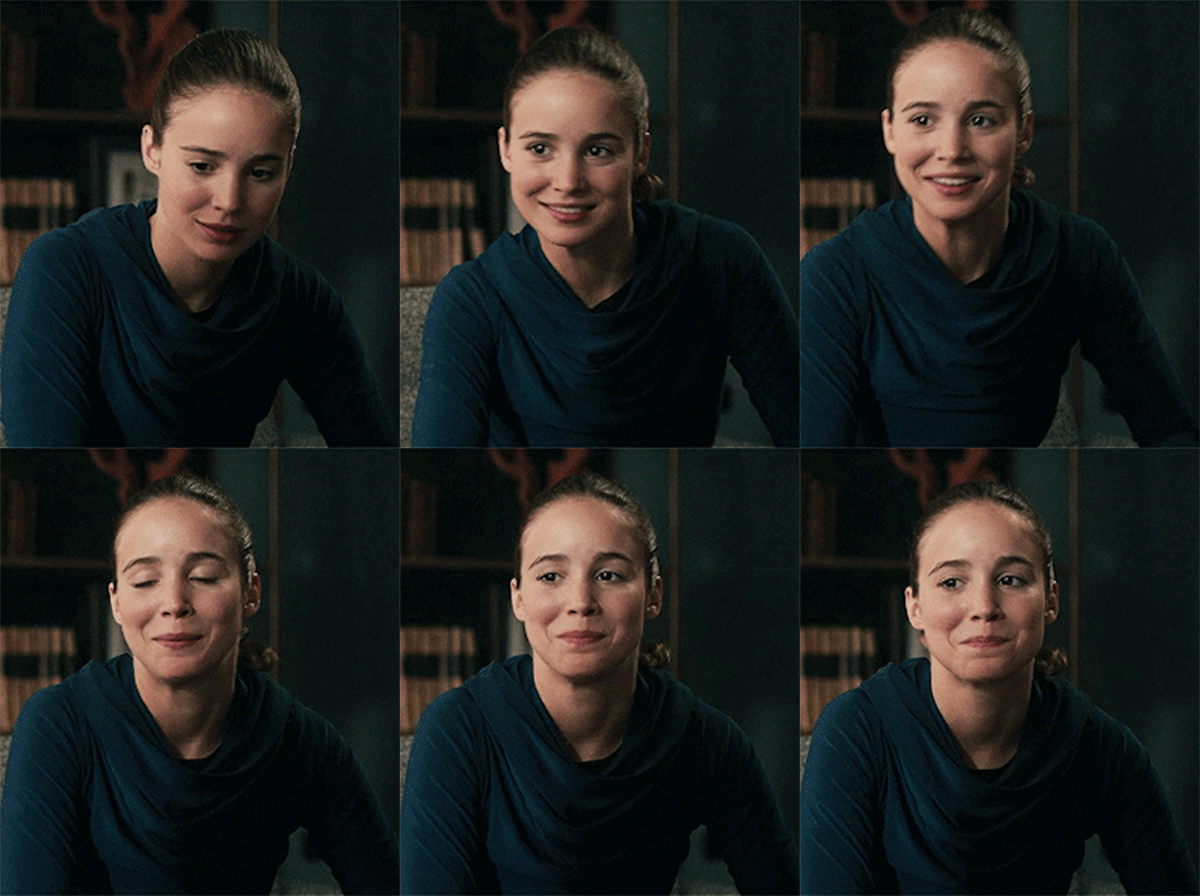
"Please."Araenia looks for her place.
Eighteen Years Old
I nearly go down on one of the pillows beside the stove trying to buckle my armor and walk at the same time.

It skids beneath my boot, catches the edge of the rug from my old bedroom, and sends the whole thing bunching toward the iron legs of the stove. I catch myself against the back of a chair with one hand and stand there for a second, leather strap clenched between my teeth, considering whether this counts as sufficient warning from the Loom.

Probably not.

The Loom has historically lacked subtlety.

I straighten the rug with my heel and finish the buckle where I stand.

The sunlight is irritatingly lovely this morning. Most of the sky beyond my windows is washed pale with cloud, but a break somewhere above the neighboring roofs has thrown a broad square of light across the sitting room, warming the old rug and the heap of blankets and pillows I have somehow accumulated beside the stove despite owning a perfectly serviceable bed.

A very good bed, actually.

It came with me from Central, along with the rug, my books, clothes, camera, Kingfisher, and most of the small things I could put my hand on and know without asking that they belonged to me.

There had been less than I thought.

That had been strange.

I had spent my entire life inside rooms full of beautiful furniture and polished silver and paintings and cabinets and little tables no one ever seemed to use. When I moved, I discovered most of it belonged to the house, or my parents, or some dead relative whose taste I had apparently been living among without noticing.

My own things barely filled the apartment. A week later, they still don't.

The place is comfortable enough, prettier than I expected to find this close to the workshop quarter, with dark wood, tall windows, iron fittings and enough decorative scrollwork around the old stove to suggest whoever built it had briefly become sentimental about heating equipment. But there are whole stretches of wall with nothing against them. One end of the sitting room contains a small table and two chairs because apparently I have committed to the possibility of a guest. The other contains my blanket nest, an abandoned book, and one sock.

I have no idea where the other sock is.

This is not currently my greatest problem. At the moment, my damn coat is missing.

I turn once, scanning the room, and the buckle at my shoulder digs into my collarbone. “Where the fuck did I put you?”

Nothing answers. Living alone has taught me that possessions behave far worse when deprived of witnesses.

I check the chair. No coat. The back of the door. No coat. I cross into the bedroom and find it thrown over the footboard, beneath the sash I rejected twenty minutes ago because it made me look as though I were trying too hard.

I huff, and I drag the coat free, take one look at myself in the mirror over the washstand, and immediately look away again.

Leather armor.

Sabre.

Dagger.

Kingfisher waiting against the bedroom doorway.

I look prepared.

That should help.

It does not.

For the better part of three days, I have been imagining this morning with the vague assumption that once I put the right things on my body, the rest of me would follow along. Apparently not.

I sling Kingfisher over my shoulder and head toward the front door before I can inspect anything else. There is toast on the kitchen table, cold enough now to qualify as building material, and I briefly consider taking it with me before my stomach twists at the idea.

Nope. I can eat afterward.

After Adrian Erez tells me whether I have just rearranged my entire life around a profession that does not want me.

I stop with the door half open.

My thumb is already rubbing over the ribbon tied around my wrist.

The silk was silver once. It still is, technically, but years beneath my fingers have dulled it and softened the edges until the fabric looks more gray than bright, worn smooth in some places and beginning to feather apart in others. My nail catches one of the familiar loose threads.

I roll it gently beneath my thumb.

Then I realize I have been standing at the door long enough to start thinking.

Absolutely not.

I pull it open.

Halfway into the hall, I remember the keys.

“Fuck.”

Back inside.

They are beside the stove, because apparently last night I decided that was a sensible place for them. I retrieve them, nearly catch Kingfisher on the doorway going back out, swear at that too, and finally get myself into the corridor before some other essential possession reveals itself to be missing.

This time I close the door firmly behind me. The key turns with a little metallic resistance before the lock catches.

For a moment I leave my hand there.

It is still strange, having a key.

Not the key itself. I have carried keys before.

This one is different.

This one opens a door nobody else expects me to return through.

No one inside knows when I leave. No one will notice whether I come back before supper. No one is going to ask why my boots are dirty or why there is a bow across the dining table or whether I remembered that I am still expected at some Lunamaul dinner next week as though leaving home somehow failed to communicate my opinion on the matter.

There is only the locked door and the weight of the key in my palm.

I put it into my pocket, and I go downstairs.

By the time I reach the street, the sun has slipped behind cloud again. The whole district has been awake for hours. A grain wagon has managed to wedge itself halfway across the lane in front of my building while the driver argues with someone unloading sacks into a warehouse. I thread between the back wheel and a stack of barrels, ducking when one of the draft horses swings its head toward me, and come out on the other side into the heat spilling from a workshop with its doors thrown open to the morning.

The forge inside flashes orange every few seconds. Across from it, looms rattle behind wide windows while lengths of dyed cloth stir overhead. Somewhere farther down the street a mill wheel groans through another turn, slow enough to hear the water dragging beneath it. The smells pile together the way they always do here, smoke over oil over wet wool, then leather, then something sour from the direction of the tanneries that makes me alter course without thinking.

I learned that alley on my second day.

I am not learning it again.

The buildings thin a little as I move northeast, sheds and workshops standing farther apart with courtyards broad enough for wagons to turn. Men and women are already blackened to the wrist with soot or blue and red with dye, aprons creased and stained from work that began well before I finished deciding which shirt would make me look least like a rich girl attempting to impersonate competence.

No one looks twice at me.

I like that.

Central Embrathis has ways of making a person aware of being seen. Not always cruelly. Sometimes the opposite. Beautiful streets encourage beautiful behavior. Someone is always arriving somewhere dressed to be noticed.

Out here, a woman shoulders past me carrying a crate of rivets and barely glances at the sword on my hip.

A man rolls a barrel across my path, shouts an apology without stopping, and nearly clips a boy carrying three loaves of bread under one arm.

Everything is occupied with becoming something else.

Grain into flour. Hide into leather. Ore into steel. Thread into cloth.

I have been here one week and already know which forge throws enough heat across the pavement to make me regret wearing leather on a warm afternoon, which bakery sells out before noon, which street clogs with farm carts, and exactly how far I can smell the tannery before taking a different route.

I also know the road to Outrider headquarters.

Entirely by accident. The fact that I have passed it several times since moving here means nothing. The stable I use is nearby. So is the bakery. Once I was simply walking. People are allowed to walk.

This morning, however, I have to go inside.

A breeze comes down the next broad lane from the grasslands and cuts through the smoke. It carries damp earth and hay with it, clean enough that I breathe more deeply before I notice myself doing so.

Two Outriders ride toward me through the traffic, side by side on a sorrel gelding and a gray mare. They are talking over the noise of the street when something gives with a sharp little snap.

One of the sorrel’s reins drops. Neither rider notices.

The broken length slips down alongside his shoulder, swinging beneath him just as he takes another step. Before his hoof can come down on it, the gray mare drops her head across, catches the leather neatly between her teeth, and jerks it clear.

Both riders pull up.

“What?”

The man on the gray looks down, follows the rein from her mouth to the sorrel’s bridle, and swears.

His companion twists in the saddle.

“Did that just break?”

The gray stands patiently between them with the loose rein still held in her teeth while they sort themselves out.

I know that's barely a hint of their intelligence.

Then the street ahead bends around a long brick workshop, and I know what is waiting beyond it before I turn the corner.

I have seen the headquarters often enough, but this does absolutely nothing to prepare me for seeing the whole thing directly in front of me when I round the corner with the express intention of entering it.

The fortress-stable spreads across the end of the broad lane, larger than the workshops around it without trying to be grand. Stone built for use. Arched openings broad enough for mounted riders. Long wings stretching around an inner yard. Forge smoke unwinding above the roofs. People move in and out through the gate with the casual confidence of those who already belong there.

A rider comes through leading a sorrel horse.

Another passes behind him carrying a saddle.

From somewhere beyond the wall comes a sharp clang, then laughter.

I take three more steps.

And it occurs to me, with sudden and horrifying clarity, that I am going to have to walk into that place, find Adrian Erez, give him my name, and tell him I think I should be one of his Outriders.

My feet keep going while the rest of me catches up.

Then I pivot smoothly around on my heel. Perfectly normally. Nothing has happened. I have simply remembered that I live four streets in the opposite direction.

I continue walking.

There is no reason to hurry. Hurrying would suggest panic, and I am not panicking. I am reconsidering. Thoughtfully. At a moderate pace.

The headquarters falls behind me.

Good. Excellent. I can go back to the apartment, eat the toast, perhaps purchase another chair. I have clearly been reckless about furniture. Maybe I should devote the day to tables.

My thumb finds the ribbon. I rub hard enough that the silk begins to twist around my wrist.

By the time I reach the next crossing I am aware of two things.

The first is that I am absolutely walking home.

The second is that I am furious about it.

I stop so abruptly that a man pushing a handcart has to jerk sideways around me.

“Watch it.”

“Sorry.”

He keeps going.

I look back.

Headquarters is still there.

“For fuck’s sake.”

The nearest place not directly in the path of commerce is a narrow service lane beside a cooper’s yard. I duck into it before another cart can flatten me and start walking with no destination at all, six or seven paces toward a recessed doorway, then back again.

The ribbon slips beneath my thumb with every turn.

This is fine.

I am allowed to leave.

Nobody even knows I planned to go today.

My parents know I intend to join. They know that part extremely well. They heard it in the sitting room, the hall, and once from the stairs when Father followed me halfway up them because apparently the first two explanations lacked volume.

They know I moved into Outer Embrathis because of it. They know I bought the armor, the sabre, the dagger. They know I am serious.

Which means they also know I can fail.

That is the thought that finally slows my pacing.

Adrian Erez can say no.

Not someday.

This morning.

He can look at me and decide I am eighteen and angry and very good at buying expensive equipment.

He can decide riding every day does not make me an Outrider.

He can tell me to go home.

And I no longer know what home means in that sentence.

The apartment? My parents’ house? Back to the life everyone assumes will still be waiting when I exhaust myself trying to escape it?

My mother had reminded me, tearful and maddeningly gentle, that moving out did not dissolve my betrothal. As though I might unpack the last of my clothes, discover marriage still existed, and return in embarrassment.

My father had been more direct. He thought I would come back. Neither of them had said it quite that plainly. They did not need to.

I walk to the doorway again.

Turn.

My thumb catches one of the frayed threads at the edge of the ribbon.

I look down and realize I have twisted the entire thing crooked.

“Oh, fuck off.”

A woman passing the mouth of the lane with a wooden crate against one hip glances toward me.

I look at her.

She looks at the empty stretch of lane behind me, then at the one in front. “You lost?”

“No.” The answer comes out offended enough that she actually pauses. I straighten. “I’m thinking.”

She considers me for one long second. “Right.”

Then she continues on.

I stand there after she has gone.

Wonderful. There is apparently a limit to the amount of private humiliation one morning can contain, and I have just found it.

I straighten the ribbon at my wrist, smoothing it once beneath my thumb.

Then I leave the lane.

The headquarters comes back into view when I turn the corner, still broad and busy and completely indifferent to the fact that I have already fled from it once.

I cross the street. I keep walking until the open gate is directly ahead and then through it before my body can attempt another independent decision.

No one stops me.

That is somehow offensive after all the trouble I have gone through getting here.

Inside, the stone walls open around a drill yard broad enough for several horses to work at once. Stable aisles run along either side beneath long arches, cooler and darker beyond the morning light. Farther back, the forge burns behind an open front, bellows breathing between bright bursts of hammering. Tack rooms and workshops fill the spaces between, doors propped open, saddles hanging from rails while riders and grooms move through with the constant, practical hurry of people who expect the day to become complicated at any moment.

The guildhall occupies the far side of the yard. Maps and dispatch boards cover much of the sheltered frontage, crowded with pinned notices, route markers and strips of paper being moved almost as quickly as they are added.

I stand just inside the gate long enough to take all of it in.

Not because anyone makes me.

Nobody appears particularly interested in me at all.

A rider leads a bay across my path and I step aside automatically. Another walks past with a bridle over one shoulder, arguing with someone behind him about a northern patrol.

Near the forge, a woman leaves a chestnut mare standing loose beside a mounting block while she ducks through the open tack-room door.

“Stay.”

The mare watches her disappear.

Then lowers her head.

One of the woman’s gloves is lying in the dirt.

The mare picks it up carefully between her teeth, walks the few steps to the tack-room doorway, and drops it directly across the threshold.

A moment later the woman backs out carrying a saddle.

Her boot nearly lands on the glove.

She stops.

Looks down.

Then looks at the mare.

“I was coming back for that.”

The chestnut turns her head away.

“Yes, thank you.”

I have stopped walking.

The mare notices me staring and looks directly at me.

I look back.

Gods.

I want one so badly it aches.

Which is not useful.

I have to convince someone I deserve one first.

I look toward the guildhall, where a woman is rearranging markers on one of the patrol maps while two riders talk over her shoulder. Nearer the stable wing, someone calls for a missing girth. A young man jogs past carrying three folded blankets and nearly loses the top one.

There is no desk marked Guildmaster.

Of course there is not.

I approach the dispatch boards instead, waiting until the woman there finishes moving a marker.

“Excuse me.”

She glances over.

“I’m looking for Guildmaster Erez.”

“Adrian?”

The familiarity catches me slightly off guard.

“Yes.”

She looks across the yard rather than toward the guildhall.

“Stable side, last I saw.”

“Thank you.”

I turn in the direction she indicates.

The stable wing is calmer than the central yard without ever becoming quiet. Hooves scrape stone beneath the arches. Leather creaks from somewhere ahead. A mare leans over a stall door and watches me pass, one ear following even after her nose does not.

I try not to stare back.

I fail.

Her eye stays on me until I have nearly passed.

“Hello.”

The ear flicks.

Nothing else.

I keep moving.

The smell is warmer here, hay and horse sweat layered over saddle soap and oil. Light falls through high openings in long pale bars, catching dust whenever someone moves through them. Tack hangs in orderly rows near an open room farther down, and beyond it the aisle gives back onto the drill yard.

No Adrian.

I am deciding whether to ask someone else when a voice carries across the open space beyond the arches.

“Adrian!”

I turn toward it.

A man on the far side of the yard lifts one hand in acknowledgment without stopping what he is doing.

For a second, that is all I see.

Then I take him in properly.

Lean. Dark-haired. Sleeves pushed back. Plain clothes with enough give in them to suggest he expects to work rather than merely supervise everyone else doing it. A length of tack rests in his hands while a chestnut gelding stands loose beside him, close enough to inspect the process.

No imposing office. No uniformed Guildmaster waiting behind a desk. Just a man in the middle of a working morning.

My stomach drops anyway.

I stop beneath the edge of the stable arch.

There he is. 111Adrian Erez.

The person I have spent the entire morning trying to reach.

The person who can tell me no.

My thumb settles over the worn silver ribbon at my wrist.

For once, I do not make myself let go.

I take a breath, step out into the yard, and start toward him.

The chestnut sees me first.

His head lifts from Adrian’s shoulder, ears coming forward as he watches me cross the open ground. There is nothing threatening in it. Nothing particularly welcoming either. Just attention so complete that for several steps I have the uncomfortable sensation of being inspected by the horse before I have even reached the man.

Adrian looks up when I am perhaps ten paces away.

His gaze follows the gelding’s.

Then settles on me.

Too late now.

I keep walking.

“Guildmaster Erez?”

“Yeah.”

That is somehow not the answer I expected.

I stop in front of him.

Up close, he looks even less like the figure I had manufactured in my head over breakfast. Early forties, perhaps. Lean rather than broad. Olive skin. Dark hair pushed carelessly back from his forehead. His clothes are good but plain, worn loose enough to move in, one knee smudged with something that looks suspiciously like saddle oil.

The piece of tack in his hands has split near a buckle.

He is halfway through stitching it.

The chestnut lowers his nose toward my sleeve.

I look at him.

He looks at me.

“Does he bite?”

“Only people he dislikes.”

I glance at Adrian.

He pulls the needle through the leather. “I’m joking.”

“Good.”

“Mostly.”

I take half a step away from the horse.

Adrian smiles faintly. “Higgins.” The gelding’s ear turns toward him. “Leave her alone.”

Higgins considers this.

Then moves his head away from me with the slow reluctance of someone doing a favor.

I decide not to comment.

Adrian waits.

Right. This is why I came over here.

“I’m Araenia Wittheart.”

His hands pause. Not for long. But long enough.

“Wittheart?”

“Yes.”

“Quenton Wittheart?”

“My father.”

He looks at me again, more closely this time.

There is recognition there now. Not of me, exactly. The name. The family. Whatever little constellation of dinners and business and aristocratic acquaintances means that a man who spends most of his life outside city walls still knows who my father is.

I hate how quickly it makes me feel twelve.

I straighten. “I want to join the Outriders.”

There.

The words fall between us.

Adrian looks at me.

Then at the bow over my shoulder.

The sabre.

The armor.

Back to my face.

I wait.

He turns the leather strap over in his hands, checks the stitch, and says, “Alright.”

I blink. “Alright?”

“Mm.”

I wait for the rest.

There is no rest.

He pulls the thread tight between his fingers. “You heard me, didn’t you?”

“Yes.”

“Good.”

I stare at him.

His mouth shifts, barely.

I realize he knows exactly what he is doing.

“I expected more than that.”

“I haven’t decided anything yet.”

“Oh.”

That lands less pleasantly.

Adrian snips the thread with a little knife, tests the repair once, then gets to his feet. Higgins immediately steps closer. Adrian holds the strap out of reach without even looking at him.

“Come on.”

I look toward the guildhall.

“Where?”

He has already started walking.

I follow. Apparently that is the answer.

We head beneath the nearest stable arch, Higgins coming with us at an easy walk. Adrian carries the repaired strap over one shoulder. He does not slow down for me, but he does not walk quickly enough to make me hurry either.

For several moments he says nothing. I become increasingly aware of the sound of my own boots.

Then: “How long have you ridden?”

“Since I was little.”

“How little?”

I think. “Five. Maybe six.”

“Lessons?”

“At first.”

“And now?”

“I ride most days.”

That gets a glance. “Most?”

“When I can.”

“Where?”

I tell him the stable.

He nods as though he knows it.

“Who do you ride there?”

“Depends.”

“Usually, then.”

“Bramble.”

He looks over. “The chestnut mare?”

“You know her?”

“I know of her.”

That sounds ominous.

“What did she do?”

“Took a piece out of Tomas Vale’s coat last winter.”

I can't help it. “Did he deserve it?”

Adrian thinks for perhaps half a second.

“Yes.”

I laugh. The feeling loosens something in my chest before I can stop it.

Adrian turns through an open doorway into the tack room. The walls inside are crowded with saddles, bridles, breastplates, bundles of reins, more leather than I have ever seen assembled in one place. Someone is working at a bench near the back, head down over a buckle.

Adrian lays the repaired strap beside him. “Try that.”

The man looks it over. “Better.”

“Higgins disagrees.”

From the doorway, Higgins reaches toward the strap.

The man slaps one hand over it. “No.”

Higgins withdraws.

Adrian keeps walking.

I follow him back out.

“You shoot?”

“Yes.”

“With that?” He nods toward Kingfisher.

“Yes.”

“How well?”

“Very.” The answer is out before I consider whether it sounds arrogant.

Adrian gives me a sideways look. I wait for him to challenge it. He does not.

“Mounted?”

“Yes.”

“Same answer?”

“No.”

That earns a small nod.

“Better from the ground.”

“Yes.”

“Alright.”

He keeps walking.

I look at him.

“That’s it?”

“For now.”

“You’re not going to ask me to prove it?”

“Not while we’re walking through a stable.” There is laughter in his voice, but he does not look at me.

We emerge into the yard again. Someone calls his name from the guildhall side.

“Adrian.”

He turns.

A rider is standing beside one of the dispatch boards with a folded sheet in one hand.

“What?”

“South road. Pellar says the culvert’s gone again.”

Adrian changes direction without warning. I nearly keep walking straight. Higgins does not. He follows Adrian. I follow Higgins. By the time I catch up, Adrian is already looking over the sheet.

“How far washed?”

“Enough they won’t get a grain wagon through.”

“Anyone check the east crossing?”

“Not yet.”

“Send two. If that’s clear, move the route. If it isn’t, close the road until someone can get stone out there.”

The rider nods.

“Vale’s still asleep.”

“Then send someone who isn’t.”

“He was supposed to take east.”

“He can take something else when he wakes up.”

The rider folds the paper again and leaves.

Adrian moves one marker on the map several inches to the side.

Then he starts walking.

I stand there for a second.

He looks back.

“You coming?”

“Yes.”

I catch up.

He has apparently already moved on.

“You said you shoot mounted.”

I blink.

“What?”

“The bow.”

“Oh. Yes.”

“How often?”

“Not as often as I’d like.”

“Why?”

“Most stable owners become strange when arrows start flying around the horses.”

“Unreasonable.”

“I’ve always thought so.”

He smiles.

Then we are quiet again.

We pass beneath the covered front of the guildhall. The boards here are worse up close, crowded with names and roads and notes pinned over other notes. One section is nothing but patrol rotations. Another has maps with colored markers running out beyond the city, into farmland and the wilderness past it.

I slow without meaning to.

Adrian notices.

“Seen enough?”

“What?”

“The maps.”

“Oh.”

I look again. “No.”

“Good answer.”

He walks on.

I follow him past the edge of the guildhall and toward the drill yard. A pair of riders is working at the far end, circling between posts. One horse sidesteps neatly around a barrel without being asked. Another rider is tightening a girth at the rail.

Adrian stops near the fence.

For the first time since I approached him, he gives me his full attention.

“Why?”

I know immediately what he means.

I still say, “Why what?”

“Why do you want to be an Outrider?”

My thumb touches the ribbon at my wrist. Just once. “I like riding.”

“I gathered.”

“And I’m good at it.”

He nods.

No argument.

That should make answering easier.

It does not.

“I like being outside the city.”

“Alright.”

“I like shooting.”

“Also gathered.”

I look at him.

He waits.

There is no judgment in his face.

That is somehow worse than if he looked skeptical.

“You’re going to make me keep talking.”

“You came looking for me.”

I exhale through my nose.

For a few seconds I watch one of the riders in the arena bring her horse down from a canter. The gelding shakes his head once, then settles.

“I want work.”

Adrian’s brows draw slightly together.

“You have work?”

“No.”

“That’s easy to fix.”

“Not just work.”

“What, then?”

I open my mouth. Nothing useful comes out.

I look toward the dispatch board again. A man has taken the place Adrian left and is moving the marker farther south.

“I don’t know how to explain it properly.”

Adrian shrugs. “Then don’t.”

I look at him.

He means it.

That should not feel unusual.

It does.

I rub my thumb over the ribbon again. “I want to know why I’m doing things.”

He waits.

I hate that he is good at that. “At home, everything already had a reason.”

“What reason?”

“Because it was next.”

The words come out before I can improve them.

I look down at my hand.

My thumb has found the frayed edge of the ribbon.

“Lessons because I was supposed to have lessons. Dinners because I was supposed to go to dinners. Learn to dance, learn to host, learn everyone’s name, learn which fork to use if somebody has decided soup requires three of them.”

Adrian’s mouth twitches.

I keep going.

“Get married because somebody decided I would. Live wherever that means I live. Do whatever comes after that.”

I stop.

The arena suddenly seems very loud.

Hooves strike packed dirt.

Someone whistles.

Higgins wanders a few paces away and lowers his head toward a patch of grass growing between two stones.

Adrian says, “Lunamaul?”

Of course he knows.

I stare at him.

“You really do know everyone.”

“Occupational hazard.” Adrian rests his forearms against the rail. “Your family happy about this?”

“No.”

No joke comes.

He looks at the armor again.

“The gear theirs?”

“Mine.”

“You bought it?”

“Yes.”

“With?”

“My money.”

He nods once.

“You still living with them?”

“No.”

Something shifts in his expression.

Not surprise exactly.

“When did you move?”

“A week ago.”

“Where?”

“Four streets from here.”

He looks past me toward the gate as though measuring the distance.

Then back.

“You moved out before you came to ask me.”

“Yes.”

“Why?”

I almost say because I was leaving anyway.

That is true.

It is also not all of it.

“Because I didn’t want to ask them.”

Adrian is quiet.

“This won’t fix whatever happened at home,” he says.

The words catch me off guard. I turn toward him. He is not looking at me now. His gaze is on the riders.

“I know.”

“Good.”

“I’m not asking it to.”

That gets his attention. I feel suddenly exposed beneath it. My fingers curl around the railing.

“I know I’m angry.”

He says nothing.

“I know some of this is because I’m angry.”

Still nothing.

“But I was riding before I was angry.”

That is not true.

Not entirely.

I have been angry most of my life.

I correct myself.

“I mean before this.”

Adrian waits.

“I’ve wanted to be out there for years.”

I nod toward the maps, though we can barely see them from here.

“The roads. The grasslands. The Whisperwood. Beyond them.”

My throat tightens around something I do not want to name.

For years, there were days when riding was the only thing that made the hours move.

Days when a horse beneath me required enough attention that I could not disappear into my own head.

Days when I rode until my legs ached because being tired from something I chose was easier than being tired from everything else.

I do not tell him that.

I do not know him.

My thumb passes over the ribbon.

“I want to know who I am and the why when I’m doing something.”

Adrian looks at me.

I wish immediately that I had said anything else.

I stare at the arena.

“That sounded ridiculous.”

“No.” He does not improve it for me. He simply says, “I know what you mean.”

I look over. There is no pity in his face. No great understanding either. Just recognition.

Someone farther down the rail calls, “Adrian, you still need that western patrol covered.”

“I know.”

“Before noon.”

“I know.”

“Just checking.”

“Check less.”

A laugh comes from somewhere behind us. Adrian pushes away from the rail.

“Come on.”

We start walking again.

This time he leads me along the outer edge of the drill yard, where the stable roofs give way enough that I can see a strip of pale sky and, beyond the far wall, the beginning of open land. The clouds are thinning again. A little sunlight spills over the arena.

“You know what the work is?” Adrian asks.

“Mostly.”

“Mostly worries me.”

“Patrols. Escort work. Road clearing. Monster hunts. Search parties.”

“Lots of waiting.”

“I can wait.”

“Bad weather.”

“I’ve met weather.”

“Not voluntarily for three days.”

“Fair.”

“Broken wagons.”

“I’m less experienced with those.”

“Dead livestock.”

I make a face.

“Still listening.”

“People who ignore every instruction you give them, then blame you when the thing you told them would happen happens.”

“That sounds familiar.”

He glances at me.

I do not elaborate.

“Sometimes,” he continues, “you spend all day finding absolutely nothing.”

“Good.”

That stops him.

“Good?”

“If we’re looking for something dangerous.”

He considers that.

“Fair.”

We keep walking.

His tone has remained easy, but I hear what sits underneath it now. He is not trying to frighten me away. He is making sure I am not in love with a story.

I look around the yard. Mud on one rider’s boots. A patched saddle hanging to dry. Someone with two fingers bound together walking out of the forge. A woman at the dispatch board scratching out one route and replacing it with another. It is difficult to romanticize people arguing about culverts.

“I know it isn’t all galloping dramatically into the wilderness,” I say.

“Shame.”

“I was counting on a cloak.”

“You can have a cloak.”

“Good.”

“Won’t help the culvert.”

“Nothing is perfect.”

Adrian laughs quietly, then his expression settles. “Can you take orders?”

I glance at him.

“Yes.”

He waits.

My mouth twists. “When they make sense.”

“There it is.”

“What?”

“The problem.”

“I can follow orders.”

“Even when you disagree?”

“Yes.”

Another pause.

I sigh. “If someone explains why.”

“And if they don’t have time?”

That catches.

I look ahead.

A stablehand leads a mare across the yard, one hand resting loosely beneath her jaw.

“I don’t know.”

“Then that’s something you learn.”

The lack of accusation takes the fight out of me.

I nod. “Alright.”

Adrian nods too.

No victory.

No lecture.

Just something added to the pile.

We reach the quieter end of the yard.

Several horses stand along the rail here, some saddled, some not. None look at me with any particular interest.

I look anyway. Of course I do.

Adrian notices. “You want one.”

I nearly laugh. “That obvious?”

“Yes.”

I lean against the rail beside him.

A bay gelding several yards away turns his head toward us, then goes back to worrying at a knot in the wood.

“I know I don’t just get one.”

“No.”

“I know.”

Adrian looks toward the horses.

“I can decide whether you’re ready to train. I can decide whether I’m willing to put my people’s time into you.”

I listen.

“I can tell you when you’re not good enough yet.”

That one stings.

I keep listening.

“But I don’t give you a dire horse.”

“I know.”

“They aren’t assigned.”

“I know.”

“They choose.”

“Yes.”

Adrian looks at me, and there is a question in it now. Not a challenge. Something else.

“And if they don’t?”

My stomach tightens. I look toward the horses again. The answer I want is immediate. Then I try again. “Then they don’t.”

Adrian says nothing. I rub my thumb slowly over the ribbon.

“I’d hate it.”

He smiles slightly.

“I imagine.”

“But they’re allowed.”

The words settle strangely after I say them. I stare at the bay gelding. He has given up on the knot. Now he is watching a fly.

“They don’t owe me anything.”

“No.”

“I could try again.”

“You could.”

“If I’m allowed.”

“That part would be up to me.”

I glance at him.

“And if you say no?”

“Then I say no.”

For one second I am back in the service lane, pacing a groove into the stones with my mother’s voice in my head and my father waiting for me to come home.

I breathe in.

“Alright.”

Adrian watches me.

I look toward the horses. The strange thing is that this no would hurt. Terribly. And yet I do not hate him for having it. I do not hate the horses for having it either. The thought catches somewhere inside me.

I touch the ribbon again.

“Do you understand why?” Adrian asks.

“Why what?”

“Why they choose.”

I think about it.

“Because they’re the ones who have to trust us.”

His expression shifts, very slightly. “Yes.”

That is all.

We stand there for a while. No lesson follows. No speech. The yard continues around us. Someone leads a horse past. A forge hammer starts again. From the guildhall, a voice calls for a courier. I realize with some irritation that I have run out of things to say.

Adrian does not appear bothered by this. Eventually he pushes away from the rail.

“You free tomorrow morning?”

I look at him.

“Yes.”

Too fast. His mouth twitches. I ignore it.

“What time?”

“Sixth bell.”

“I’ll be here.”

“Bring the bow.”

I nod.

“The rest of the gear too?”

“If you want.”

That is not an answer.

“What am I doing?”

“Meeting horses.”

For a moment I am sure I heard him wrong.

“What?”

Adrian looks toward the stable aisle.

“I’ll show you the herd.”

Everything inside me goes still.

Not calm.

The opposite.

“Oh.”

“Mm.”

I look toward the horses again. They are suddenly much more frightening.

“You think I’m ready for that?”

“I think you’re worth asking.”

The words hit harder than they should. I look down before my face can do anything embarrassing. My thumb finds the ribbon. Worn silk. Soft edge. One loose thread beneath my nail. I smooth it back into place.

“And if none of them want me?”

Adrian is quiet long enough that I look up.

“Then none of them want you.”

I nod.

It hurts even as a possibility.

He does not pretend otherwise.

After a moment he adds, “Doesn’t mean none ever will.”

I breathe out.

“Right.”

He turns as someone calls his name again from across the yard. This time I stop him before he can leave.

“Guildmaster.”

"Adrian." He looks back. "Please."

"Adrian."

He looks at me expectgantly... and I have no idea what I meant to ask.

Perhaps whether I should prepare differently. Whether there is something I should do. Whether horses can smell terror.

Instead I say, “Thank you.”

Adrian’s expression goes briefly puzzled. Then he nods.

“Tomorrow.”

“Tomorrow.”

He starts away.

Higgins, who has spent most of the conversation wandering wherever he pleased within a loose orbit of us, falls into step beside him.

After several paces Adrian looks back.

“Eat first.”

I stare. He keeps walking.

“I ate.”

He turns around without stopping. “No, you didn’t.”

“How would you know?”

He points vaguely toward me.

I look down at myself.

Nothing.

“What does that mean?”

“Tomorrow, Wittheart.”

I open my mouth.

He is already being intercepted by another rider.

The conversation is over, apparently.

I stand beside the rail. For a little while, I do nothing. The fear is still there. That surprises me. I had expected getting this far to remove it somehow. Instead it has changed shape. Yesterday I was afraid Adrian would not let me try. Now I am afraid the horses will look at me and find nothing they want.

There is no argument I can prepare for that. No speech. No armor that makes a difference.

I rub the ribbon once between my fingers and let my hand fall.Across the yard, Adrian is bent over another dispatch with two riders talking at once. Nobody is watching me.

I look toward the stable aisle.

Tomorrow morning I will walk back through this gate. I have no idea what happens after that.

For once, nobody does.

I smile.
Other
OUTRIDER'S FIELD JOURNAL · UNMARKED COUNTRY
Araenia Wittheart
Travel advisory: the horse has opinions.
Last Active 1794258162
Inventory
Weapons
Kingfisher
MundaneTier Three
A composite longbow with gold and blue leather wrapping around the handle. Arrows are fletched with kingfisher feathers.
More Details
Kingfisher is a composite longbow crafted from wood, horn, and sinew, its grip wrapped in varnished leather of deep blue and gold. It was a gift from her mother when she was seventeen, the only gift she's ever gotten from her mother that made her feel seen. Araenia keeps it paired with arrows fletched in the bright blue feathers of kingfishers, a detail that followed the deciding of its name. The first time she fired it, she watched the arrow cut cleanly through its target and thought of a kingfisher diving into water: swift, precise, and striking before there was time to react. The name stuck.
Sabre
MundaneTier Two
Plain looking, high quality sabre best suited for horseback.
More Details
Araenia’s sabre is plain at first glance, with an undecorated steel guard, a dark leather-wrapped grip, and none of the ornament expected of a weapon carried by someone of her family’s standing. What it lacks in decoration, however, it makes up for in craftsmanship: the blade is finely balanced, keen-edged, and made to withstand hard use rather than display. She bought it herself with money she had quietly saved, shortly before announcing that she had joined the Outriders. More than the bow she would later name, the sabre was a choice made entirely for herself, purchased before anyone could tell her she was not allowed to make it.
Dagger
MundaneTier Two
Narrow steel dagger with a dark, leather-wrapped grip.
More Details
Araenia’s dagger is a well-made but unadorned weapon, with a narrow steel blade, simple guard, and dark leather-wrapped grip. Like the rest of the equipment she purchased before joining the Outriders, it was chosen for quality rather than appearance, sturdy enough for hard use and balanced comfortably in the hand. She bought it alongside her sabre and armor with money she had saved herself, making sure she had everything she might need before announcing her intention to join. It is less a ceremonial sidearm than a practical tool, kept close and cared for accordingly.
Armor
Leather Armor
MundaneTier Two
Basic armor made of flexible brown leather.
More Details
Araenia’s armor is made from supple brown leather, flexible enough not to hinder her movement while still offering protection where it matters. Like her sabre, it is plainly styled but finely made, with sturdy stitching, reinforced panels, and little ornament beyond the natural variations of the leather itself. She bought it with her own saved money at the same time as the sabre, quietly assembling everything she would need before telling her family she intended to become an Outrider. By the time she announced her decision, she had already made sure she was prepared to follow through with it.
Consumables
No consumables listed.
Misc
Leah's Ribbon
MundaneTier One
A narrow silver silk ribbon, faded with age.
More Details
Araenia keeps a narrow, silver, silk ribbon that once belonged to Leah, faded slightly with age and softened from years of handling. Leah used to wear it in her hair, and after her death Araenia kept it rather than allowing it to be packed away with the rest of her things. She usually carries it tucked somewhere close at hand, and over time developed the habit of rubbing the silk between her fingers when she is anxious, frightened, or trying to keep herself under control. The motion is so ingrained now that she often does it without realizing. To anyone else it is only an old ribbon. To Araenia, it is one of the few pieces of Leah she has left.
Camera
MundaneTier Three
An expertly made daguerreotype camera.
More Details
Araenia’s camera is an expertly made daguerreotype model, finely constructed from polished wood, brass, and glass, with a sturdy fitted case to protect its more delicate components. She received it for her fifteenth birthday and quickly became devoted to photography, learning the careful patience required to frame, expose, and develop each image herself. For years it was one of her most treasured possessions and saw frequent use, but without access to a proper darkroom it has sat unused for several months. She still keeps it carefully maintained, however, unwilling to let dust or neglect settle into something she fully intends to use again.
Components
Magical Components
No magical components listed.
Mundane Components
No mundane components listed.
Companions
Murderhorse
pet
SpeciesHorse
GenderStallion
Age10
BreedDire Horse
Height16.1hh
dickheadwill kill youbiter
Murder. Horse.
Tracker
Stats
Stat
Score
Modifier
Strength (STR)
14
+0
Dexterity (DEX)
16
+3
Constitution (CON)
15
+2
Intelligence (INT)
12
+1
Wisdom (WIS)
10
+0
Charisma (CHA)
8
-1
Stat Buffs / Debuffs
Item
Stat
Bonus
Notes
Non-Magic Human
DEX
+1
Racial Bonus
Non-Magic Human
CON
+1
Racial Bonus
Non-Magic Human
STR
+1
Racial Bonus
Magic Tracks
Source
Loom
Magic Class
N/A
Subclass
N/A
Inactive
Tier
Post Count
Requirement
Goal
Achieved
Tier 1
#
#
#
No
Tier 2
#
#
#
No
Tier 3
#
#
#
No
Skill Tracker
Points Collected0
Points Spent0
Current Point Total0
No skills listed.
Aspirations
No aspirations have been added yet.